Chinese (Simplified)
 Arabic
 Dutch
Dutch English
 French
 German
 Italian
 Portuguese
 Russian
 Spanish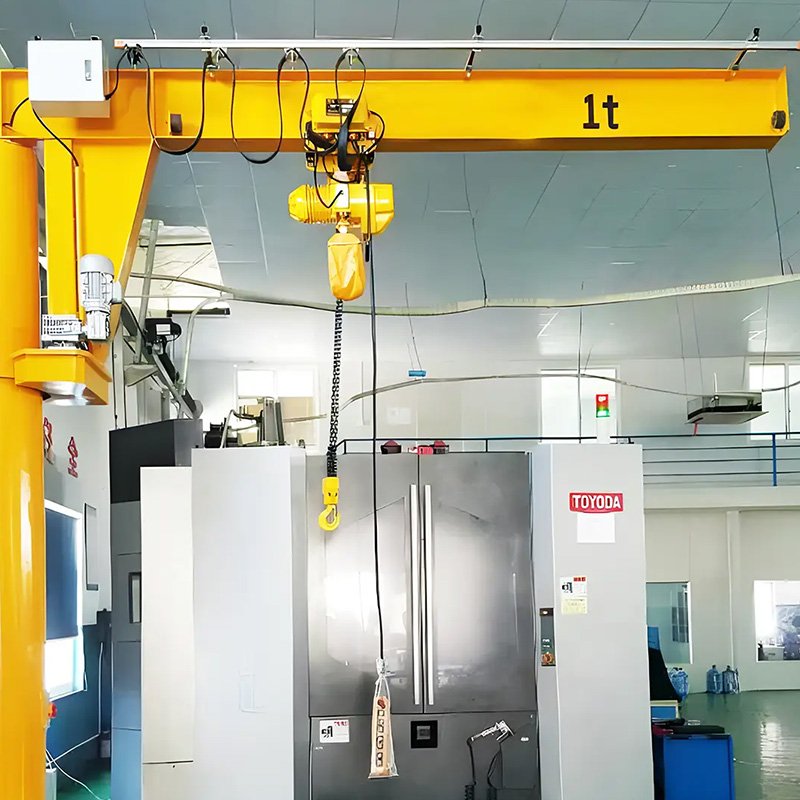
When users search “what size portable jib crane do I need”, they are looking for a practical answer on how to choose the correct crane size for their specific job site. The right size affects lifting safety, operational efficiency, floor space planning, and overall investment value. Therefore, identifying the correct technical parameters before purchasing is critical.
Based on real industrial engineering practices, the most important factors that determine the size of a Portable Jib Crane include: Load Capacity, Lifting Height, Working Radius, and Base Stability Design.
1. Core Technical Factors That Determine Crane Size
Load Capacity
The crane must safely handle the maximum intended load with a proper safety margin. Selecting an undersized crane can cause structural overload and operational hazards.
| Application Scenario | Typical Max Load | Recommended Load Capacity |
|---|---|---|
| Factory maintenance | 300–500 kg | ≥ 500–630 kg |
| Warehouse material handling | 500–1000 kg | ≥ 800–1250 kg |
| Mold lifting and equipment installation | 1000–2000 kg | ≥ 1250–2500 kg |
📌 Recommended rule of thumb:
Maximum load × 1.25 = Safe working configuration
Lifting Height
Lifting height determines whether the crane can deliver materials from the floor to the target elevation. This parameter must consider:
| Required Data | Description |
|---|---|
| Building clearance height | Distance from floor to roof beam or ceiling |
| Crane structural height | Mast height and boom dimensions |
| Rigging allowance | Space occupied by hook + sling |
Suggested ranges by working environment:
| Scenario | Recommended Lifting Height |
|---|---|
| Truck loading | 2–4 m |
| Workstation transfers | 2.5–5 m |
| High-rack warehouse lifting | 4–6 m |
Working Radius
The boom length determines the crane’s operating coverage. A balance is needed between coverage and floor maneuverability.
| Situation | Suitable Radius |
|---|---|
| Precision assembly stations | 1.5–2.5 m |
| Warehouse handling | 2.5–4 m |
| Auxiliary lifting beside large equipment | 3–6 m |
Too short = limited reach
Too long = heavier structure and higher floor support requirement
Base Design & Stability
The base structure must match the size and capacity of the crane:
| Base Type | Features | Best Use |
|---|---|---|
| Anchored base | Best stability | Permanent installation |
| Counterweight base | Flexible and movable | Changeable job sites |
| Caster wheel base | Maximum mobility | Multi-station operations |
Larger radius or heavier loads require stronger base counterforce and floor loading capacity.
2. How Load Capacity and Lifting Height Drive Sizing Decisions
A concise decision framework:
| If Parameter Is Too Small | If Too Large | Best Practice |
|---|---|---|
| Unsafe lifting conditions | Unnecessary cost increase | Add safe extra margin |
| Can’t reach target height | Spatial interference | Base on measured clearance |
| Small working range | Difficult maneuverability | Plan by workflow path |
📍 Engineering Example:
- Max weight: 500 kg → Suggested load capacity: ≥ 630 kg
- Site clearance: 3 m → Net lifting height: ≥ 2.6 m
- Required reach: 2.5 m → Boom radius: 2.5–3 m
3. Recommended Portable Jib Crane Sizes for Common Industrial Uses
| Application | Load Capacity | Lifting Height | Boom Radius |
|---|---|---|---|
| Factory maintenance | 250–1000 kg | 2–4 m | 2–3 m |
| Warehouse loading | 500–2000 kg | 3–6 m | 3–5 m |
| Truck loading | 500–1500 kg | 2–4 m | 2–4 m |
| Precision installation | Heavy duty short range | 2–3 m | 1.5–2.5 m |
These are common industry specifications. Final sizing should be based on verified job-site data.
4. Job-Site Measurement Checklist Before You Choose
Accurate data helps avoid oversizing or performance limitations:
| Data Required | Why It Matters |
|---|---|
| Maximum lifting weight | Includes load + rigging |
| Target lifting height | Actual delivery level |
| Ceiling / beam clearance | Avoids structural collision |
| Floor loading capability | Concrete thickness & grade |
| Working path obstacles | Ensures boom rotation space |
📌 If you are unsure, simply provide photos + marked dimensions. Our engineers can assess your site remotely.
5. Why Professional Sizing Matters
Choosing the right size crane ensures:
- Safer handling of repetitive lifting tasks
- Smooth movement in limited space environments
- Reduced energy use and maintenance frequency
- Higher working efficiency and operator confidence
At Yonghao Crane, we follow international industrial standards for design and load testing. With more than ten years of lifting engineering experience, our jib cranes offer:
✓ Reliable performance in continuous duty cycles
✓ Enhanced mobility for multi-point material handling
✓ Customizable boom length and mast height
✓ Engineering support with technical drawings and cost options
Conclusion
Sizing a Portable Jib Crane correctly starts with accurate data on Load Capacity, Lifting Height, and Working Radius. If you are still considering “what size portable jib crane do I need”, our engineering team is ready to provide a professional selection plan tailored to your job environment.
Contact us with your site details — we will help you choose the right crane the first time. Email: yonghaoqizhong@163.com