Chinese (Simplified)
 Arabic
 Dutch
Dutch English
 French
 German
 Italian
 Portuguese
 Russian
 Spanish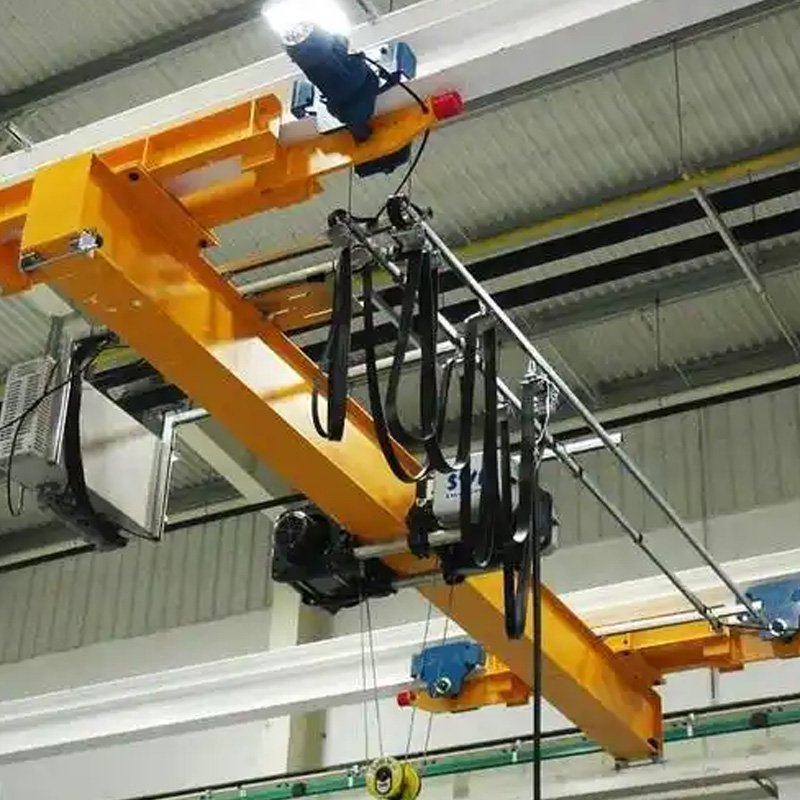
Quick Answer: What Is an Electromagnetic Crane?
An electromagnetic crane is a type of overhead or gantry lifting equipment that uses an electromagnetic lifting magnet to handle ferromagnetic materials such as steel plates, billets, scrap metal, and coils. By controlling electric current, the magnet generates and releases magnetic force, enabling fast, safe, and efficient material handling in steel mills, scrap yards, foundries, ports, and fabrication workshops.
1. What Is an Electromagnetic Crane?
An electromagnetic crane integrates a crane system with an industrial lifting electromagnet. Unlike hook cranes or grab cranes, it does not rely on mechanical gripping. Instead, it lifts loads through magnetic attraction generated by an energized coil inside the magnet.
Core Characteristics
- Designed specifically for ferromagnetic materials
- Fast loading and unloading cycles
- Remote-controlled magnetization and demagnetization
- Reduced need for manual slinging
- Improved operational efficiency in bulk steel handling
This type of crane is commonly configured as:
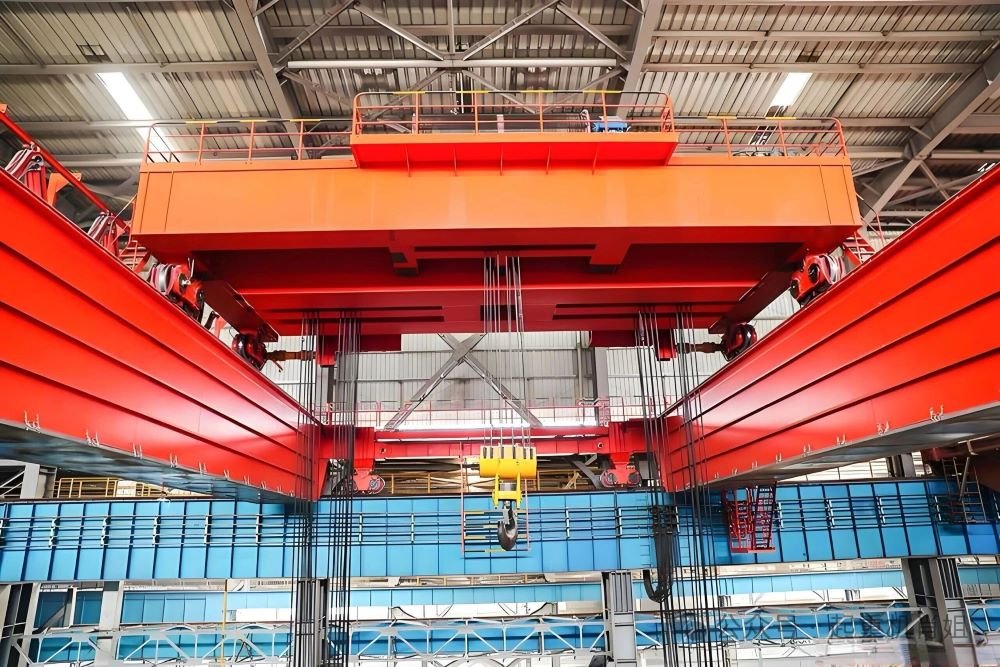
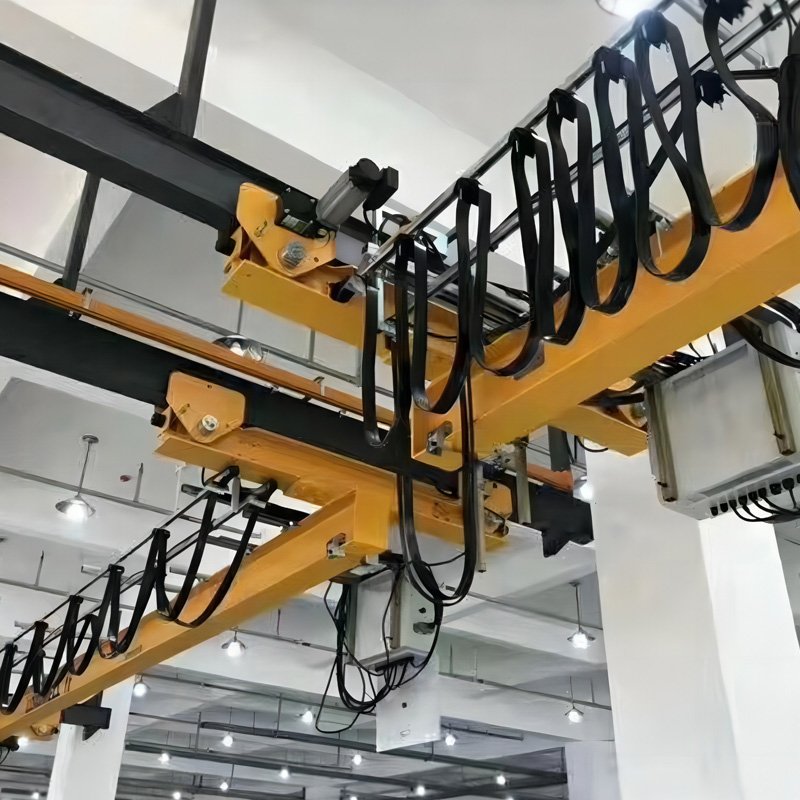
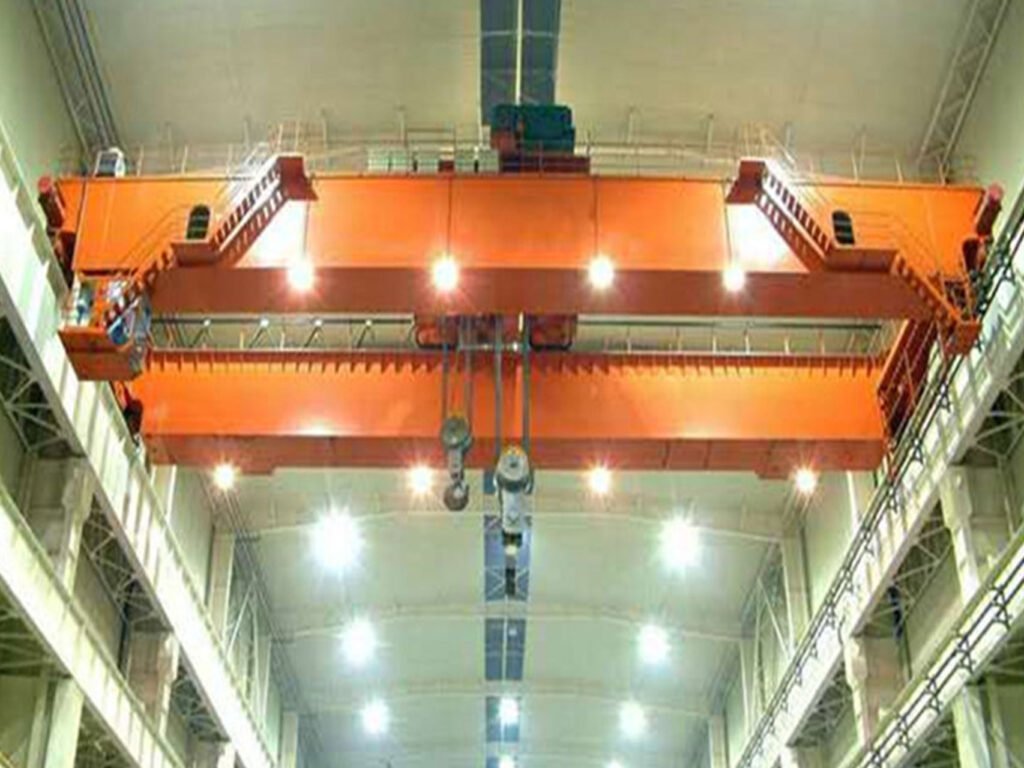
- Overhead bridge crane
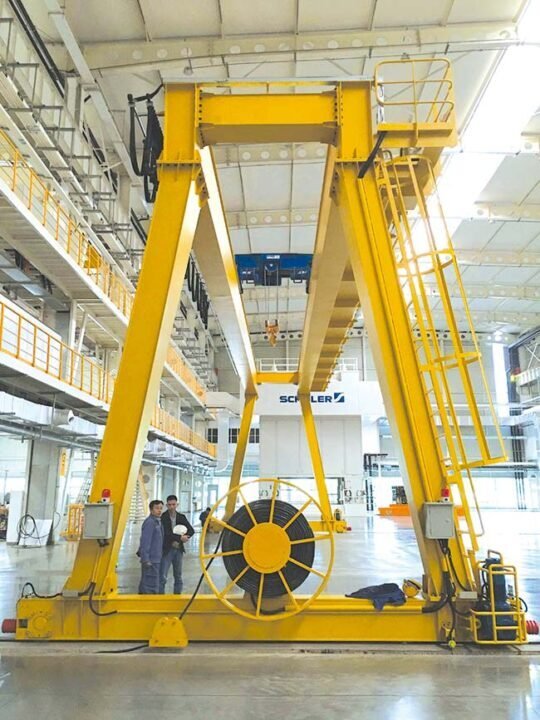
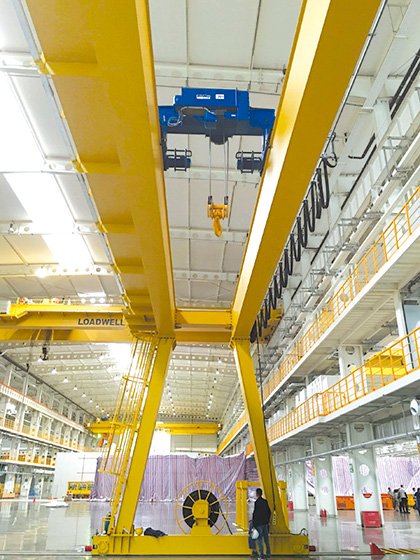
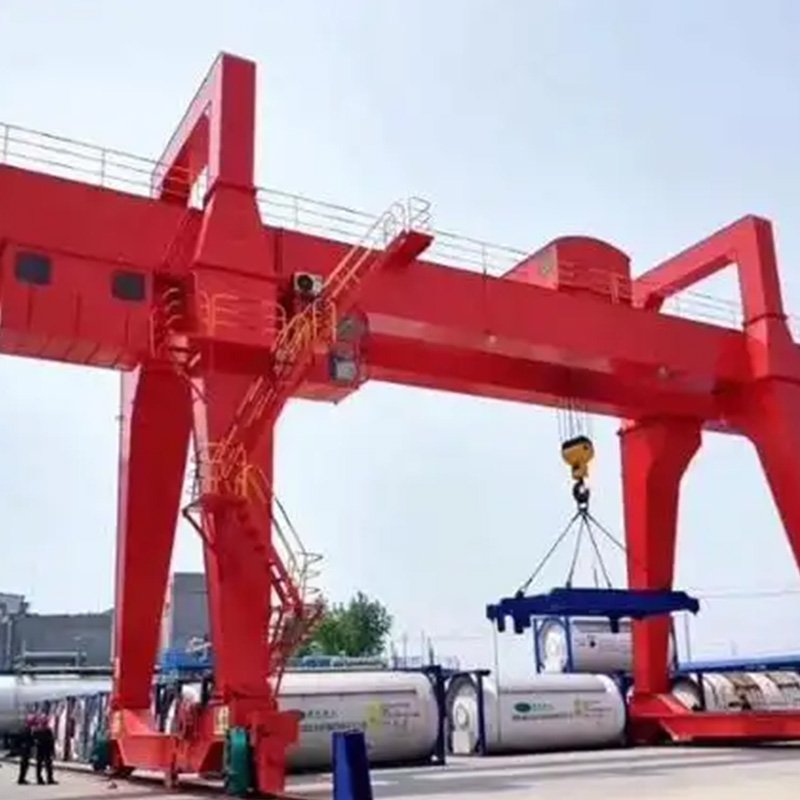
- Gantry crane
- Semi-gantry crane
The lifting magnet can be circular for scrap or rectangular for plates and slabs, depending on the application.
2. How Does an Electromagnetic Crane Work?
Understanding the working principle helps users select the right configuration and ensure safe operation.
Step-by-Step Working Process
- Power On
Electric current flows through the copper coil inside the electromagnet. - Magnetic Field Generation
The energized coil creates a strong magnetic field. - Material Attraction
Ferromagnetic materials such as carbon steel are attracted and held firmly. - Lifting and Transport
The crane hoist lifts and moves the load to the target location. - Power Off / Demagnetization
Once the current is cut, the magnetic field disappears, and the load is released.
Key Technical Components
- Lifting electromagnet
- Crane bridge and end trucks
- Hoisting mechanism
- Power supply system
- Rectifier control cabinet
- Cable reel or festoon system
For safety-critical environments, systems often include:
- Backup battery systems to prevent load drop during power failure
- Overload protection
- Temperature monitoring for the magnet coil
3. Main Types of Electromagnetic Cranes
Different applications require different magnet shapes and crane configurations.
3.1 Scrap Handling Electromagnetic Crane
Typical Use:
- Scrap yards
- Steel recycling plants
Features:
- Circular lifting magnets
- High-duty cycle operation
- Designed for continuous bulk handling
3.2 Steel Plate Handling Electromagnetic Crane
Typical Use:
- Steel mills
- Plate processing workshops
Features:
- Rectangular magnets
- Strong surface contact
- Suitable for flat material lifting
3.3 Billet and Slab Handling Electromagnetic Crane
Typical Use:
- Rolling mills
- Continuous casting plants
Features:
- Heat-resistant magnets
- Heavy load capacity
- High temperature insulation design
4. Where Are Electromagnetic Cranes Used?
Electromagnetic cranes are widely adopted in heavy industries where steel handling is frequent and high volume.
Major Application Industries
| Industry | Typical Materials Handled |
|---|---|
| Steel Manufacturing | Slabs, billets, coils |
| Scrap Recycling | Mixed scrap steel |
| Shipbuilding | Steel plates |
| Ports & Logistics | Steel cargo loading |
| Foundries | Cast iron components |
In steel plants, an electromagnetic crane significantly reduces manual intervention and improves handling speed, especially during repetitive loading cycles.
5. Key Advantages of Using an Electromagnetic Crane
5.1 Improved Efficiency
- Faster loading compared to manual slinging
- Quick release mechanism
- Reduced cycle time
5.2 Enhanced Safety
- Remote operation minimizes worker exposure
- No need for chain slings in many scenarios
- Optional backup power to prevent accidental drops
5.3 Lower Labor Cost
- Reduced manpower requirement
- Streamlined material flow
5.4 Adaptability
- Can handle irregular scrap shapes
- Flexible magnet configuration
6. Limitations to Consider
Although highly efficient, electromagnetic cranes have operational boundaries:
- Only suitable for ferromagnetic materials
- Cannot lift stainless steel grades with low magnetic permeability
- Load holding depends on continuous power supply
- Surface contamination such as heavy rust may reduce magnetic efficiency
Understanding these limitations helps prevent misuse and operational risks.
7. How to Choose the Right Electromagnetic Crane
Selecting the correct electromagnetic crane requires evaluating several engineering factors.
7.1 Load Capacity
Define:
- Maximum lifting weight
- Average working load
- Required safety factor
7.2 Material Type
- Scrap steel
- Steel plates
- Billets or slabs
- Temperature of materials
7.3 Working Environment
- Indoor or outdoor
- Ambient temperature
- Dust and humidity levels
- Duty cycle classification
7.4 Power System Configuration
- Standard rectifier system
- Backup battery system
- Control method: cabin, remote, or pendant
7.5 Crane Structure
- Overhead crane
- Gantry crane
- Customized heavy-duty solution
A professional engineering team should evaluate rail span, lifting height, plant layout, and structural load requirements before final design confirmation.
8. Safety and Maintenance Recommendations
To ensure long-term performance:
Routine Maintenance Checklist
- Inspect magnet surface for wear or damage
- Check coil insulation resistance
- Verify cable condition
- Test emergency power backup system
- Monitor operating temperature
Operational Safety Tips
- Never exceed rated capacity
- Ensure stable power supply
- Keep lifting surfaces clean
- Train operators regularly
Preventive maintenance directly extends equipment lifespan and reduces downtime.
Conclusion
An electromagnetic crane is a highly efficient and specialized lifting solution for handling ferromagnetic materials in heavy industries. By understanding its working principle, structural components, application scenarios, and selection criteria, industrial buyers can make informed decisions that improve operational efficiency and workplace safety.
When properly engineered and maintained, an electromagnetic crane becomes a core asset in steel production, recycling operations, and large-scale material handling systems.
If you are planning a new steel plant, upgrading your scrap handling line, or optimizing internal logistics, choosing the right electromagnetic crane configuration can significantly enhance productivity and long-term operational reliability.
For customized electromagnetic crane solutions and professional technical support, contact us at yonghaoqizhong@163.com and our engineering team will respond promptly with a tailored lifting proposal.