Chinese (Simplified)
 Arabic
 Dutch
Dutch English
 French
 German
 Italian
 Portuguese
 Russian
 Spanish
1. What is a Jib Crane?
A Jib Crane is a compact, flexible, and efficient lifting device designed for handling lighter loads. Unlike traditional large cranes, a Jib Crane offers a more compact design and greater operational flexibility, making it ideal for use in areas with limited space. You’ll often find Jib Cranes in workshops, warehouses, and manufacturing settings, where they help move loads quickly and precisely in confined spaces.
2. Basic Components of a Jib Crane
Jib Cranes have a relatively simple design, but each component plays a crucial role in ensuring efficient and stable operation. Below are the main components of a Jib Crane:
Jib Arm
The jib arm serves as the core component of the Jib Crane. It is typically designed as a horizontal or inclined structure that lifts loads. You can customize the length and rotation angle of the jib arm to meet various operational needs, maximizing its work range.
Support Structure (Base & Column)
The support structure is the foundation of the Jib Crane, ensuring stability. It typically includes a fixed column or bracket, but some Jib Cranes feature mobile supports for added flexibility.
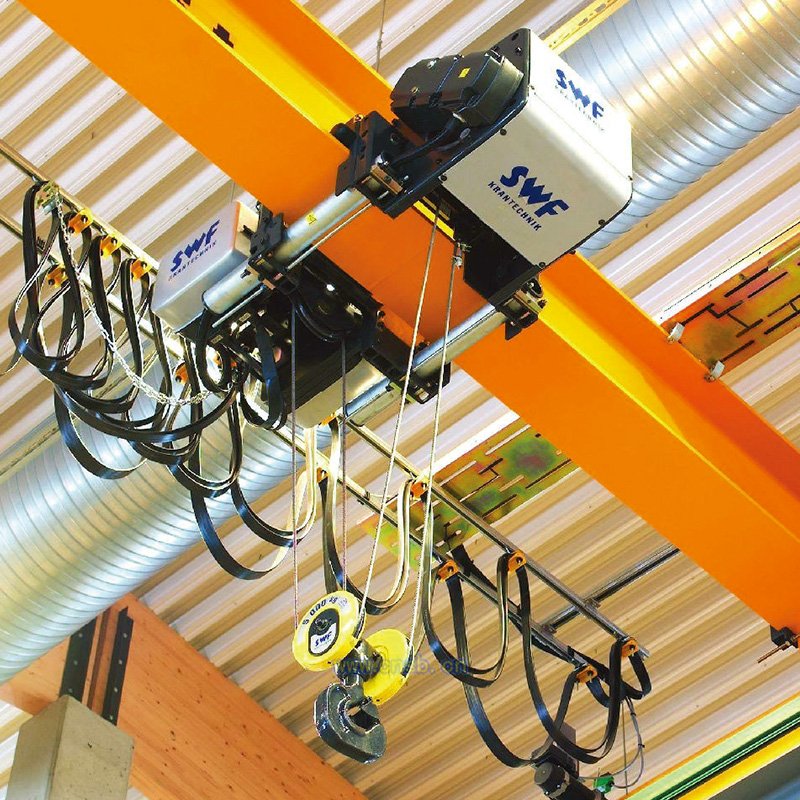
Hoist and Head
The hoist holds the load, while the crane head controls the lifting and positioning movements of the hoist. Modern Jib Cranes come equipped with electric or hydraulic control systems that ensure precise lifting operations.
Control System
The control system, usually an electric control panel or remote control, allows operators to manage the lifting, rotation, and positioning of the jib arm. These controls are simple to use, making it easy for operators to handle the crane.
3. How Does a Jib Crane Work?
A Jib Crane operates through its ability to rotate and lift loads. Here’s a typical operation sequence:
- Attaching the Load: The operator hooks the load to the hoist, preparing for the lift.
- Rotating or Lifting the Jib Arm: The jib arm is lifted or rotated using electric or hydraulic systems, moving the load to the desired height.
- Moving the Load: Once lifted, the jib arm rotates or tilts to move the load to its target position.
- Precise Control: Jib Cranes offer accurate control, often with digital systems that allow operators to achieve millimeter-level precision, ideal for sensitive lifting tasks.
4. Advantages of Jib Cranes
Jib Cranes offer several unique advantages, particularly in environments that require flexibility and light load handling. Below are some of the key benefits:
- Space Efficiency
- Due to their compact design, Jib Cranes occupy minimal floor space, making them perfect for tight areas like workshops, warehouses, and production lines.
- Operational Flexibility
- Jib Cranes provide rotation and lifting capabilities, allowing operators to move loads over a wider area within a confined space. This makes them ideal for environments requiring high adaptability.
- Ease of Operation
- Jib Cranes are very user-friendly. Most come with simple electric control panels or remote controls, enabling operators to quickly learn how to operate them.
- Cost-Effectiveness
- Compared to larger cranes, Jib Cranes are less expensive to purchase and maintain, making them an affordable and practical solution for small businesses and factories.
- Durability and Stability
- Built with high-strength materials, Jib Cranes provide durability and stability, ensuring they can handle varying load capacities and withstand long-term, heavy-duty use.
5. Applications of Jib Cranes
Jib Cranes are versatile and suitable for a wide range of applications, especially in environments where space is limited or precise control is necessary. Here are some typical use cases:
- Manufacturing and Workshops
- In manufacturing environments, Jib Cranes are used to move components, tools, and lightweight equipment. They’re particularly helpful in precision manufacturing or assembly lines.
- Logistics and Warehousing
- In warehouses, Jib Cranes are commonly used for material handling and packaging tasks. Their flexibility allows them to perform efficiently in tight spaces.
- Construction and Building Sites
- On construction sites, Jib Cranes lift lightweight building materials and equipment, particularly in confined spaces like basements or underground garages.
- Precision Industries
- In industries like aerospace manufacturing or medical equipment production, Jib Cranes are preferred for their ability to handle light loads with precision.
6. Common Types of Jib Cranes
Depending on the task at hand, Jib Cranes come in several types. Here are the most common ones:
- Fixed Jib Cranes
- Fixed Jib Cranes stay stationary and handle long-term lifting operations in places like factories or production lines.
- Movable Jib Cranes
- These cranes are equipped with wheels or tracks, allowing them to move around the workspace. They’re ideal for tasks that require frequent repositioning.
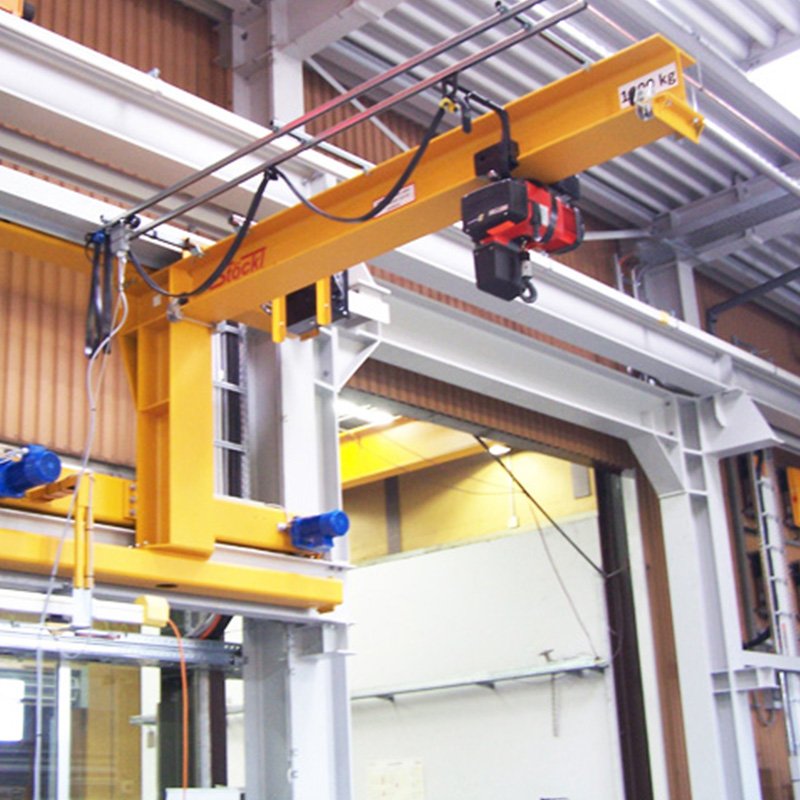
- Wall-Mounted Jib Cranes
- These cranes mount on walls or columns, saving valuable floor space. They commonly serve in small workshops, warehouses, or spaces with limited ground area.
- Rotating Jib Cranes
- These cranes provide a larger range of rotation, making them ideal for jobs requiring extensive lifting across a broad area.
7. Conclusion: Enhance Your Operations with a Jib Crane
A Jib Crane offers an efficient and cost-effective solution for lifting lighter loads in confined spaces. With its compact design, flexibility, and ease of operation, it has become an indispensable tool for various industries. Whether you’re dealing with manufacturing, warehousing, or construction, a Jib Crane helps streamline operations and increase productivity.
If you’re looking for an affordable, high-performance lifting solution, the Jib Crane is your answer. With over a decade of experience, Yonghao Crane delivers reliable, high-quality cranes tailored to meet your needs. Contact us today for expert advice, customized solutions, and comprehensive support to optimize your operations!