Chinese (Simplified)
 Arabic
 Dutch
Dutch English
 French
 German
 Italian
 Portuguese
 Russian
 Spanish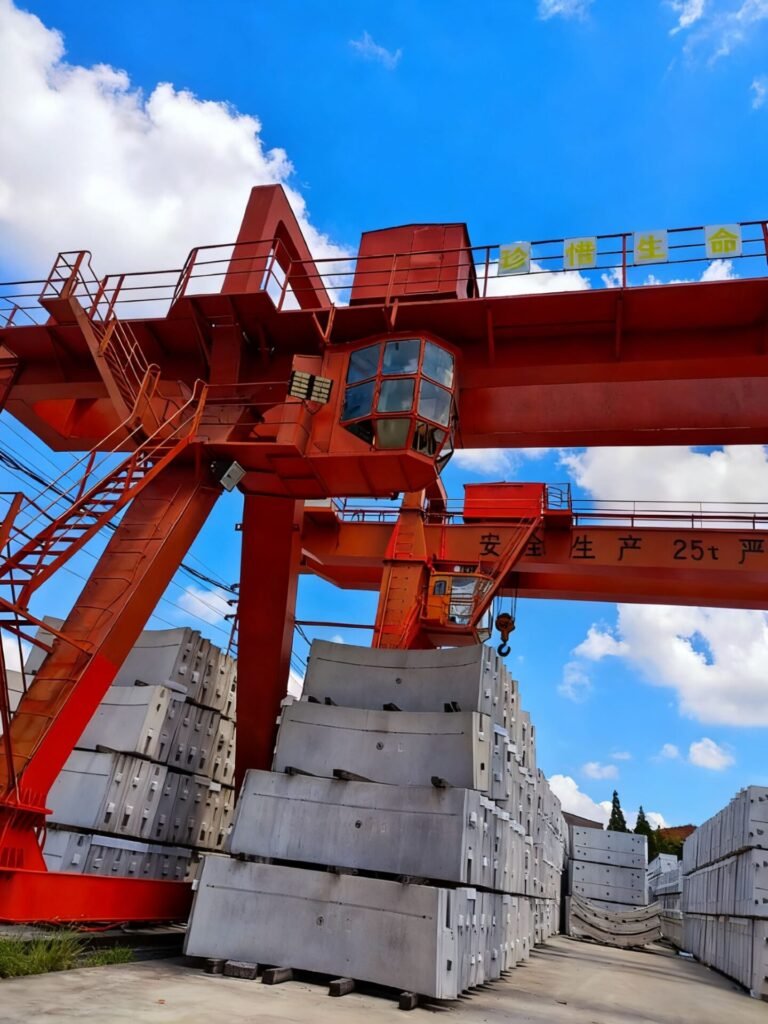
In the global logistics and maritime industry, the gantry crane plays an essential role in ensuring smooth cargo movement and efficient operations. Whether at large container terminals or inland ports, gantry cranes are the backbone of modern port logistics.
So, what is a gantry crane used for? Simply put, it’s primarily used for loading, unloading, stacking, and transferring containers between ships, yards, and trucks. This article explores how gantry cranes are used in port operations and container handling, covering their types, applications, technological features, and key selection criteria to help you understand their industrial significance.
1. Overview of Gantry Cranes in Port Operations
In port operations, cranes are crucial for determining overall efficiency. Common types of port cranes include Ship-to-Shore (STS) cranes, Rubber-Tyred Gantry (RTG) cranes, and Rail-Mounted Gantry (RMG) cranes.
Compared to traditional overhead cranes, a gantry crane for port operations offers greater span, flexibility, and lifting capacity. It can travel across the yard to stack containers of various sizes (20ft, 40ft, etc.) and operate efficiently in challenging environments such as high winds or heavy rain.
That’s why in modern container terminals, the gantry crane is considered the most critical piece of container handling equipment for achieving high throughput and cost efficiency.
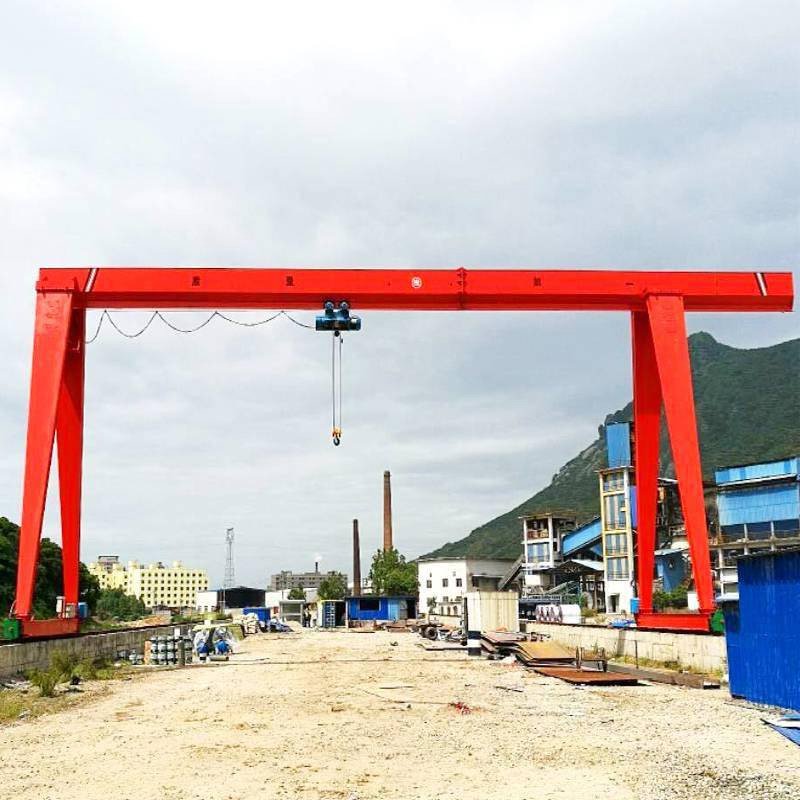
2. Main Types of Gantry Cranes Used in Container Handling
Ship-to-Shore (STS) Gantry Cranes
STS cranes are used to load and unload containers between vessels and the quay.
- Structure: Typically rail-mounted with a span exceeding 50 meters and lifting capacities over 60 tons.
- Function: Handles direct container transfer between ship decks and shore transport.
- Advancement: Modern STS cranes include anti-sway systems and remote operation controls for improved precision and safety.

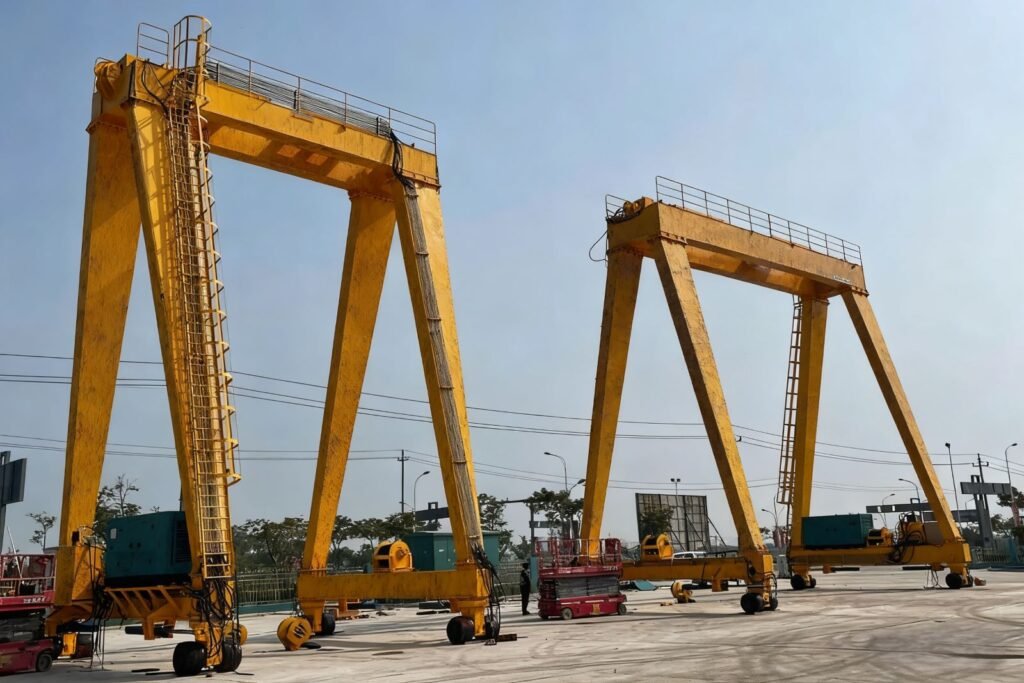
Rubber-Tyred Gantry (RTG) Cranes
RTG cranes are mobile gantry cranes designed for container yards.
- Applications: Stack containers up to 5–8 layers high within limited spaces.
- Features: Powered by diesel, hybrid, or electric systems; capable of moving laterally across lanes.
- Advantages: High flexibility, reduced maintenance costs, and space efficiency.
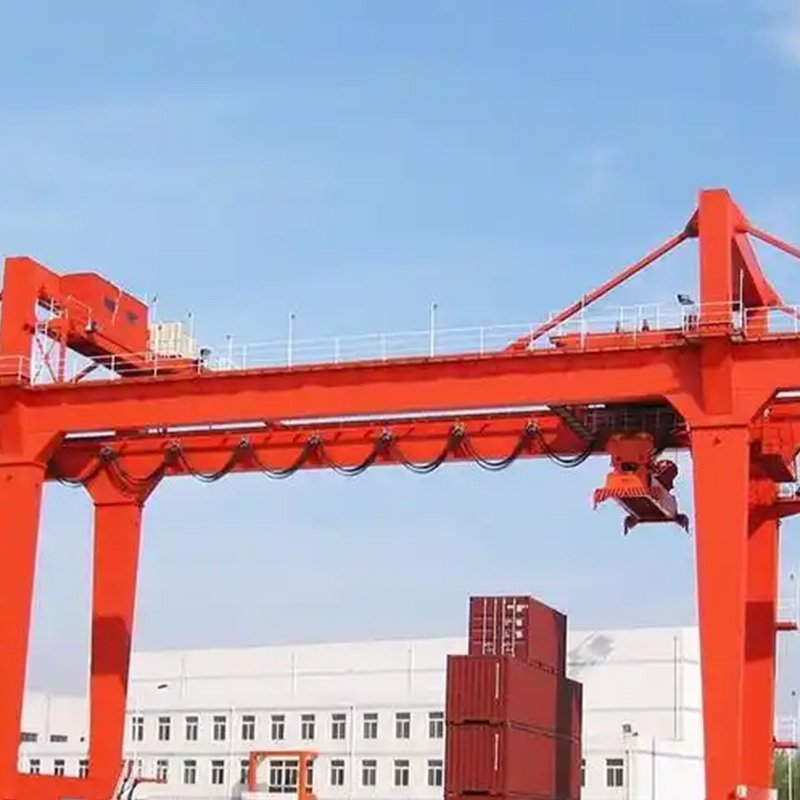
Rail-Mounted Gantry (RMG) Cranes
RMG cranes run on fixed rails and are key to fully automated terminals.
- Applications: Commonly used in large ports or intermodal rail yards.
- Features: High positioning accuracy, 24/7 operation, and integration with AGV systems.
- Innovation: Equipped with AI vision and IoT technology, making them essential to smart port development.
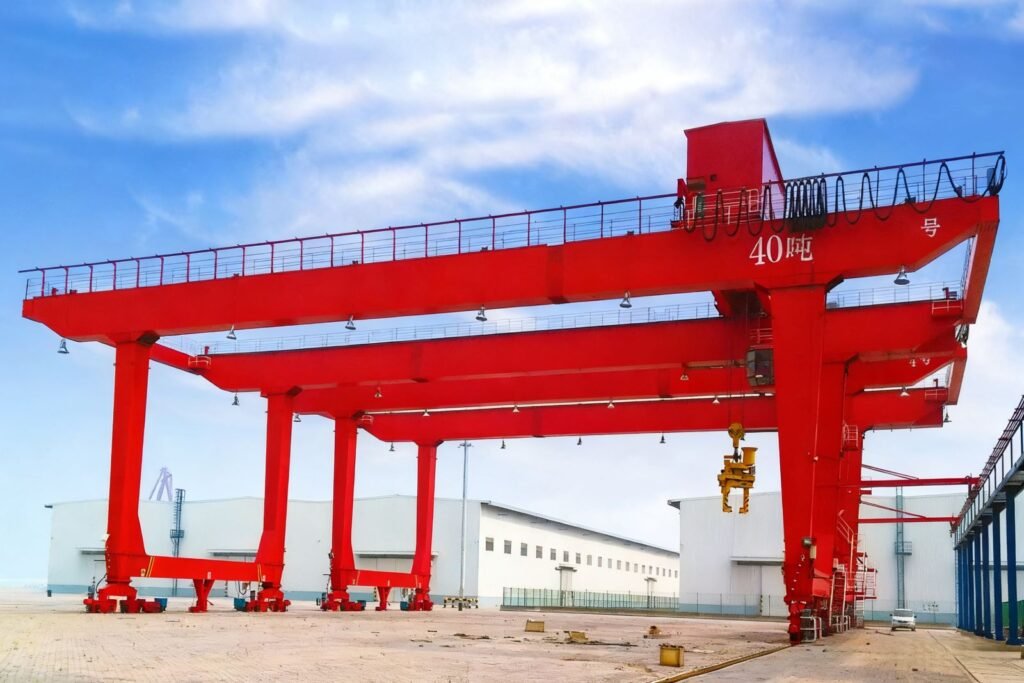
By integrating STS, RTG, and RMG systems, ports can achieve optimized workflows from ship unloading to yard storage and inland transportation.
3. How Gantry Cranes Improve Port Efficiency
The use of gantry cranes significantly boosts operational efficiency in ports. The following data highlights their impact:
| Key Metric | Before Using Gantry Cranes | After Using Gantry Cranes | Improvement |
|---|---|---|---|
| Vessel turnaround time | 18 hours | 11 hours | ↑ ~39% |
| Daily container throughput | 800 TEU | 1300 TEU | ↑ ~62% |
| Energy consumption per unit | 100% | 72% | ↓ ~28% |
Furthermore, gantry cranes for container handling equipped with automation and control systems reduce human intervention, minimize errors, and improve safety while optimizing labor and operational costs.
4. Safety and Technological Innovation in Modern Gantry Cranes
As ports move toward automation and digital transformation, modern gantry crane technology continues to evolve with advanced safety and control systems.
Key innovations include:
- Anti-sway control systems – Enhance load stability and minimize swing during lifting.
- Remote and automated operations – Reduce on-site labor requirements and enhance safety.
- Smart load monitoring systems – Track load weight, wind speed, and vibration in real time.
- Energy-efficient solutions – Electric and hybrid power systems reduce carbon emissions and maintenance costs.
These advancements reflect the global trend toward smarter, greener, and safer port infrastructure.
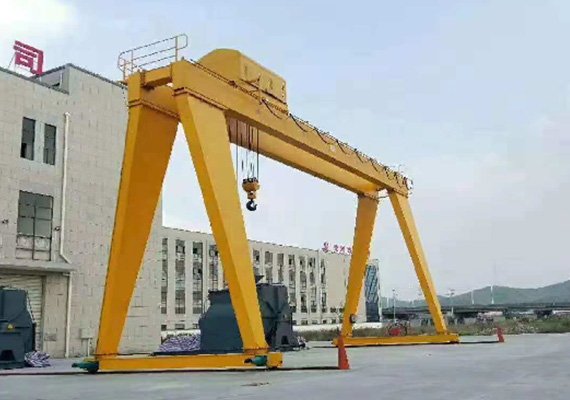
5. Case Study: Real-World Gantry Crane Applications in Global Ports
At the Port of Singapore, over 130 fully automated RMG cranes operate continuously, handling thousands of containers daily.
- Result: Yard efficiency improved by 40%, while labor costs dropped by 30%.
- Technologies used: AI-based routing, 5G communication, and centralized control systems.
Similarly, China’s Yangshan Deep-Water Port employs a combination of RTG cranes and STS cranes for synchronized loading and unloading, enabling high-density stacking and seamless ship-to-truck coordination.
These real-world examples demonstrate how gantry crane applications have become essential to the success of modern, high-capacity ports.
6. How to Choose the Right Gantry Crane for Port and Container Terminals
Selecting the right gantry crane for port operations depends on specific operational requirements, such as yard layout, container throughput, and automation goals.
| Evaluation Factor | Recommendation |
|---|---|
| Stacking height and space availability | Choose RTG for flexible yards; RMG for automated, fixed tracks. |
| Workload and lifting frequency | STS or RMG cranes for high-capacity terminals. |
| Energy and power system | Opt for electric or hybrid systems for efficiency and sustainability. |
| Automation level | Automation reduces human risk and improves long-term cost efficiency. |
For example, a transshipment-focused port may combine STS + RTG cranes for versatility, while intermodal terminals benefit from RMG systems for high-precision, rail-based container handling.
Conclusion
By now, it’s clear what a gantry crane is used for in port operations — not just for lifting containers, but as a strategic enabler of global trade.
As automation, digitalization, and green technology continue to reshape the industry, the gantry crane for port operations will remain a cornerstone of efficiency, sustainability, and innovation in modern logistics.
Looking for a reliable gantry crane manufacturer for your next project? Yonghao provides customized lifting solutions designed for safety, efficiency, and long-term performance. Contact yonghaoqizhong@163.com to get a tailored quote and expert support.