Chinese (Simplified)
 Arabic
 Dutch
Dutch English
 French
 German
 Italian
 Portuguese
 Russian
 Spanish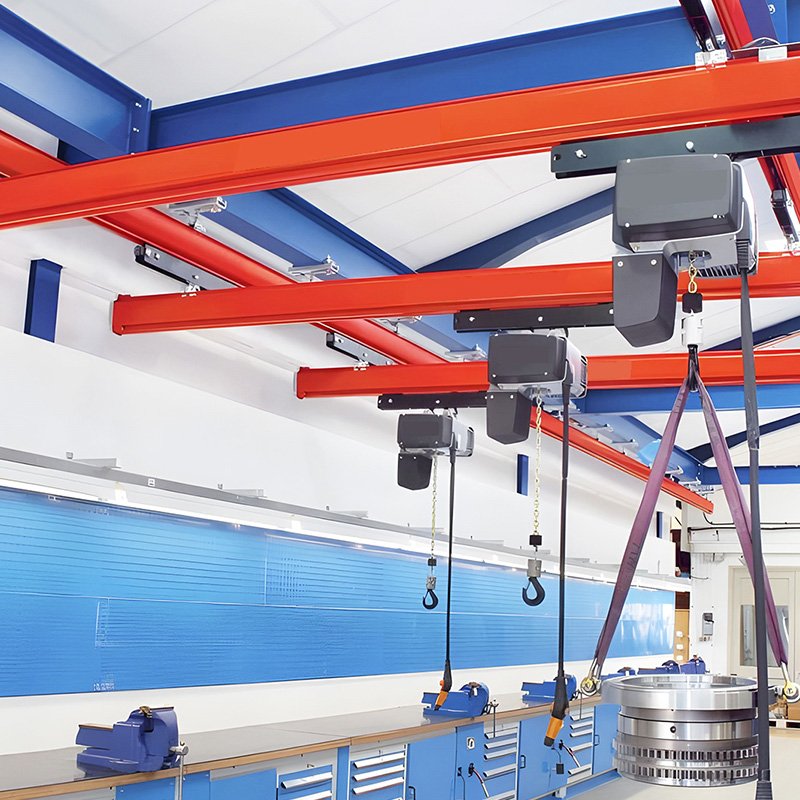
In modern manufacturing plants, automotive workshops, machining facilities, and warehouses, jib cranes are widely used due to their compact structure, flexible operation, and defined working coverage. However, while many companies focus on equipment procurement, they often underestimate the importance of proper jib crane installation.
In reality, professional and standards-compliant jib crane installation directly affects operational safety, structural stability, service life, and long-term maintenance costs. This guide provides a systematic overview of installation preparation, foundation requirements, step-by-step procedures, safety standards, and commissioning processes to help project managers and engineers make informed decisions.
1. Preparation Before Jib Crane Installation
Thorough planning is essential before starting any jib crane installation.
1.1 Confirm Crane Type and Technical Specifications
Common types include:
- Floor-mounted jib crane
- Wall-mounted jib crane
- Wall-traveling jib crane
Key technical parameters to confirm:
| Parameter | Description |
|---|---|
| Rated Capacity | Typically 0.25 ton to 5 tons |
| Arm Length | Usually 2 m to 8 m |
| Lifting Height | Based on workshop requirements |
| Rotation Angle | Commonly 180° or 360° |
Each type has different structural and foundation requirements, which must be verified before installation.
1.2 Site Condition Assessment
A professional site evaluation should include:
- Concrete strength grade, typically C25 or higher
- Floor thickness, often 200 mm or more depending on capacity
- Available headroom
- Power supply specifications, such as 380V or 460V
- Obstruction-free rotation radius
Accurate assessment prevents structural risks and installation delays.
2. Foundation Requirements for Jib Crane Installation
For floor-mounted systems, foundation design is critical to ensure long-term stability.
2.1 Independent Concrete Foundation
Most floor-mounted jib cranes require a dedicated reinforced concrete foundation. Key considerations include:
- Foundation dimensions based on capacity and arm length
- Reinforcement cage inside the foundation
- Pre-embedded anchor bolts
- Structural stability and load distribution
Concrete curing should generally be completed for at least 7 to 14 days before proceeding with jib crane installation, depending on strength requirements.
2.2 Anchor Bolt Installation
Two common anchor methods:
- Pre-embedded anchor bolts, recommended for most installations
- Post-installed chemical anchors, suitable for light-duty cranes
Installation requirements:
- Vertical deviation typically controlled within 1/1000
- Correct exposed bolt length according to design drawings
- Proper tightening torque applied
Anchor bolt quality directly determines column stability.
3. Step-by-Step Jib Crane Installation Process
A standardized jib crane installation process usually follows these stages:
3.1 Positioning and Layout
- Determine foundation center point
- Verify rotation clearance
- Mark anchor bolt positions
3.2 Column Installation for Floor-Mounted Systems
- Lift and position the column using appropriate lifting equipment
- Adjust vertical alignment
- Tighten anchor bolts in stages
Laser measuring tools or precision levels are recommended for alignment accuracy.
3.3 Mounting the Jib Arm and Slewing Mechanism
- Connect the jib arm to the column
- Install bearings or rotation assemblies
- Manually test smooth rotation
The rotation should be stable and free of abnormal resistance.
3.4 Hoist and Trolley Installation
- Secure the electric hoist
- Adjust trolley running clearance
- Verify track alignment
Misalignment may cause excessive noise and premature wheel wear.
3.5 Electrical System Connection
- Route control cables properly
- Ensure grounding protection
- Install and test limit switches
- Test emergency stop functions
All electrical connections must comply with local electrical safety standards.
4. Load Testing and Commissioning
After completing jib crane installation, load testing and commissioning are mandatory.
4.1 Static Load Test
Typically performed at 100 percent to 125 percent of rated capacity.
Inspection points include:
- Structural deformation
- Column stability
- Anchor bolt integrity
4.2 Dynamic Load Test
Operational testing includes:
- Lifting and lowering movements
- Trolley travel
- Rotation performance
- Brake responsiveness
All movements should be smooth and free of abnormal vibration or noise.
5. Safety Standards and Compliance
Proper jib crane installation should comply with relevant international standards such as:
- ISO 4301 crane classification standards
- FEM design standards
- OSHA safety regulations
Additional considerations include:
- Weld quality inspection
- Anti-corrosion treatment
- Scheduled inspection programs
- Operator training
Compliance ensures both legal conformity and operational safety.
6. Common Installation Mistakes to Avoid
Frequent issues observed in real projects:
- Insufficient foundation strength
- Column misalignment
- Ignoring rotation clearance
- Improper electrical grounding
These errors may result in premature failure or safety hazards.

7. When to Choose Professional Jib Crane Installation Services
Professional installation is strongly recommended for:
- Equipment above 3 tons capacity
- High-risk industries such as chemical plants or nuclear facilities
- Overseas or large-scale engineering projects
Professional services typically include:
- Detailed CAD installation drawings
- On-site technical supervision
- Global installation support
- Remote commissioning assistance
At Yonghao Crane, with more than 20 technical patents and extensive project experience, we provide customized installation solutions based on real site conditions, ensuring efficient and safe jib crane installation worldwide.
8. Maintenance After Jib Crane Installation
Proper maintenance extends equipment lifespan and ensures safety.
Recommended practices:
- Regular inspection of anchor bolt tightness
- Lubrication of slewing mechanisms
- Electrical system inspection
- Routine safety checks
Preventive maintenance significantly reduces operational risk.
Conclusion
Professional and standards-compliant jib crane installation is the foundation of long-term safety and operational reliability. From foundation design and anchor embedding to load testing and regulatory compliance, every step plays a critical role.
For professional jib crane installation support and a customized lifting solution tailored to your site conditions, contact us today at yonghaoqizhong@163.com and our engineering team will respond promptly with detailed technical guidance.