Chinese (Simplified)
 Arabic
 Dutch
Dutch English
 French
 German
 Italian
 Portuguese
 Russian
 Spanish
In modern manufacturing, maintenance and warehouse logistics, companies are seeking more than lifting efficiency alone. They also need equipment that is flexible in small spaces and reliable for daily operations. A portable jib crane is designed to solve common constraints such as limited working areas, high manual labor intensity and safety risks. To truly understand the value of these cranes, we must start with their structure, load handling mechanics and the real problems they solve on site. So, how do portable jib cranes work?
What Is a Portable Jib Crane
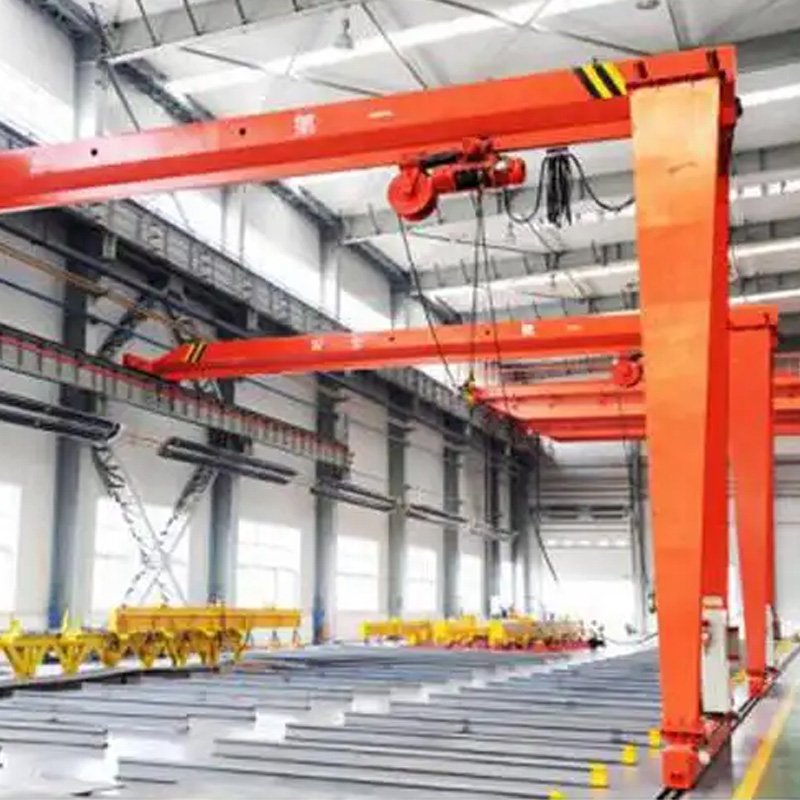
A portable jib crane is a light lifting machine that requires no foundation installation. It can be quickly relocated to different workstations, enabling precise lifting of small and medium loads. Its engineering purpose includes:
- Reducing injuries caused by manual material handling
- Improving repetitive lifting cycles efficiency
- Reaching areas that fixed cranes cannot cover
It is widely used for point-to-point lifting tasks, such as loading components into fixtures, changing tooling, or positioning parts during repair.
Main Components and Functional Roles
To professionally answer how do portable jib cranes work, we start with the structural engineering behind them.
| Component | Main Function | Engineering Focus |
|---|---|---|
| Mobile Base | Supports entire crane and allows relocation | Ground suitability load stability |
| Jib Boom | Provides horizontal lifting radius | Steel section strength bending resistance |
| Hoist System | Moves load up or down | Chain or wire rope speed and duty rating |
| Slewing Mechanism | Enables wider coverage area | Rotation angle manual or powered design |
| Safety Features | Prevents instability or misoperation | Braking reliability locking design |
All structures are tested to provide enough safety margin even when the crane is in motion.
How Do Portable Jib Cranes Work: Mechanism Explained
The working mechanism can be explained through four essential actions.
1. Vertical lifting
The hoist drives the chain or wire rope to lift the load. Operators must follow the rated capacity to avoid structural fatigue and overturning risks.
2. Horizontal movement
The hook travels along the jib through a trolley system to enable accurate positioning with minimal manual pushing.
3. Slewing rotation
Depending on the model, the jib can rotate from 180 degrees up to 360 degrees to expand working coverage and reduce repositioning tasks.
4. Machine mobility
The crane can be moved by wheels or by forklift pockets which solve the problem of fixed cranes not reaching certain areas.
Standard operating procedure
| Step | Operator Action | Safety Focus |
|---|---|---|
| 1 | Move crane to work area and lock base | Ground must be flat and load bearing |
| 2 | Align hook with load and lift | No overloading or side pulling |
| 3 | Move horizontally or rotate jib | Keep people outside swing radius |
| 4 | Slow down and align at destination | Prevent load swinging |
| 5 | Set down and release brakes | Never move while load is lifted |
Types of Portable Jib Cranes and Selection Guide
| Type | Key Features | Recommended Use | Selection Focus |
|---|---|---|---|
| Mobile floor jib crane | Highest mobility | Warehouse material handling | Floor bearing capacity |
| Portable column jib crane | Higher load stability | Equipment maintenance areas | Anti-tip foundation design |
| Foldable jib crane | Compact for storage | On site repair tasks | Rigidity when fully deployed |
Selection advice
Fixed workstations with wider coverage needs → choose larger slewing range
Heavier lifts → choose stronger column design
Frequent layout change → choose foldable or lightweight base
How Portable Jib Cranes Create Real Value
| User Pain Point | Solution Provided |
|---|---|
| High labor intensity and injury risk | Mechanical assisted lifting eliminates strain |
| Fixed cranes cannot reach all areas | Mobile design fills the coverage gap |
| Space limits installation of heavy equipment | No foundation required and easy deployment |
| Flexible production layout required | Fast relocation supports lean workflows |
It is not only a machine but also a workplace ergonomics improvement and production flexibility upgrade.
Safety and Maintenance Best Practices
- Comply with standards such as ISO 4301 and EN 13155 for load safety
- Inspect hooks, safety latches and chains before every shift
- Base must not be moved under load
- Never lift over personnel or dangerous zones
- Check obstacles before slewing
Suggested inspection intervals
| Item | Frequency |
|---|---|
| Chain or wire rope wear | Weekly |
| Welds and fastening condition | Quarterly |
| Wheels and braking system | Semi yearly |
Real Industrial Applications
| Industry | Use Case | Main Benefit |
|---|---|---|
| Machinery manufacturing | Component loading and unloading | Reduced workstation cycle time |
| Automotive maintenance | Engine or part replacement | Lower safety risks |
| Warehouse logistics | Small goods transfer | Less workforce demand |
| Ship maintenance | Confined space lifting | Higher operator safety |
Customers report an average 30 percent reduction in manual handling time after adoption.
Why Choose Us for Portable Jib Crane Solutions
- Professional lifting engineering team
We provide structural analysis and stability evaluation - All components tested before delivery
Ensuring durability and long service life - Custom configurations available
Including special lifting attachments and anti corrosion designs - Proven results across industries worldwide
Trusted by customers in multiple sectors
We do more than sell equipment. We offer reliable lifting solutions that improve productivity and long term operational safety.
Conclusion
Understanding how do portable jib cranes work shows why they are the ideal solution for local lifting tasks. Their flexibility, safety and space saving features make them a powerful tool in modern industrial environments.
If you are looking for a smarter way to improve lifting efficiency and workplace safety, our engineering team is ready to provide professional selection support and tailored solutions. Contact yonghaoqizhong@163.com to get a tailored quote and expert support.