Chinese (Simplified)
 Arabic
 Dutch
Dutch English
 French
 German
 Italian
 Portuguese
 Russian
 Spanish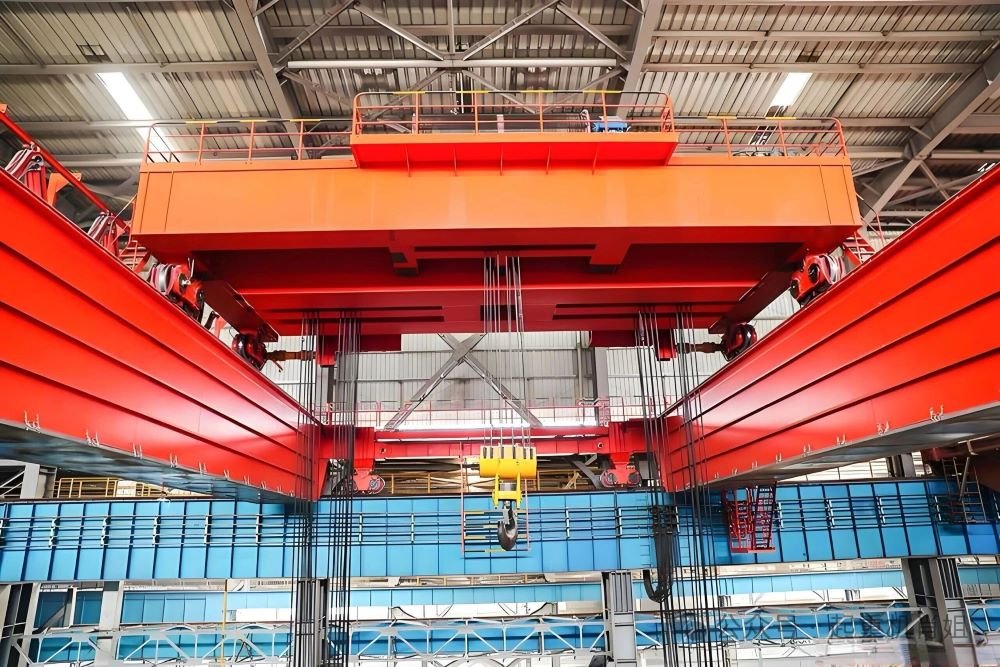
In modern heavy-duty foundries, a casting crane is not just a tool for transporting ladles and castings; it is a critical component that ensures production continuity, safety, and efficiency. Traditional cranes often struggle under high temperatures, heavy loads, and continuous operation, leading to problems such as wire rope wear, brake failure, or inadequate precision.
Modern casting cranes are comprehensively upgraded in design, control, and materials, effectively addressing these challenges. They provide foundries with reliable, high-performance, and low-maintenance lifting solutions. This article will explore the core advantages and key performance parameters of modern casting cranes, helping foundry engineers and procurement professionals make informed decisions.
1. Heavy-Load Stability for Maximum Reliability
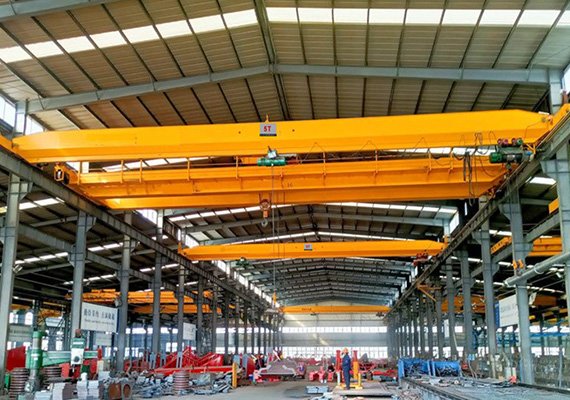
The primary requirement for any casting crane is its load-bearing capacity and stability. Traditional cranes often concentrate loads on a few beams or rails, which can lead to stress concentration and structural deformation, especially when handling eccentric ladles or impact loads.
Modern casting cranes feature four-girder four-rail or six-rail structures, which effectively distribute the load and reduce stress concentration. The box-type main beam provides high rigidity, with a vertical deflection of ≤S/1000 (S = span), offering excellent torsional and lateral resistance. These cranes can safely handle 50–520 tons, ensuring stable lifting for ladles in processes such as converters, electric furnaces, and continuous casting.
Practical application: In continuous casting or converter operations, the ladle weight can reach several hundred tons. Modern casting cranes maintain stability even under eccentric or impact loads, ensuring uninterrupted and safe production.
2. Safety Redundancy for Risk Reduction
Safety is paramount in heavy-duty lifting. Traditional single-motor, single-brake cranes are prone to accidents in the event of system failure. Modern casting cranes are equipped with dual motors and dual brakes, allowing safe operation even if one system fails.
Additional safety features include:
- Load alerts: Alarm at 90% of rated load and automatic stop at 105%
- Anti-sway control: Prevents load swing that could endanger personnel or equipment
- Zone load limits and 3D laser collision protection: Ensures safety in the operation area
Expert insight: Redundant safety systems and intelligent monitoring not only reduce accident risk but also extend equipment lifespan and minimize costly downtime.
3. Extreme Adaptation to Harsh Foundry Conditions
Foundry environments are extremely demanding, with ladle temperatures reaching up to 500°C, and dust and molten metal splashes posing constant threats to equipment.
Modern casting cranes excel in harsh conditions:
- High-temperature resistance: H-class insulated electrical systems and main beam insulation ≥50mm
- Dust and radiation protection: IP67-rated electrical components, resistant to dust and thermal radiation
- Continuous operation: Capable of stable operation in 300–500°C environments for extended periods
User benefit: Unlike traditional cranes, which may suffer frequent electrical failures or reduced wire rope life under extreme conditions, modern casting cranes ensure reliable operation and reduce maintenance needs.
4. High-Efficiency Intelligent Control
Modern casting cranes significantly enhance operational efficiency and precision.
Key technologies include:
- Multi-hook synchronized lifting: Error ≤0.1mm, ensuring stable handling of heavy components
- Micro-speed positioning: Accurate ladle handling minimizes collision risks
- PLC with Ethernet bus: Real-time monitoring and smart interface for 24/7 continuous operation
- Hydraulic synchronized lifting: Further increases multi-hook operational efficiency
Application example: When lifting large castings with multiple hooks, precise control prevents tilting or collisions, improving productivity and reducing manual intervention.
5. Durability and Low Maintenance for Long Lifespan
Heavy-duty foundry conditions demand high structural and transmission durability. Modern casting cranes are optimized using finite element analysis and equal-strength design, enhancing fatigue resistance.
- Carriage annealing: Eliminates internal stress, prolonging service life
- Fewer transmission components: Simplifies maintenance and reduces downtime
- Long-term reliability: Remains stable even under heavy, high-frequency workloads
Customer value: Reduced maintenance and downtime ensure continuous production and maximize return on investment.
6. Key Performance Parameters of Modern Casting Cranes
For a clear understanding, here are the core performance parameters of modern casting cranes:
| Parameter | Specification |
|---|---|
| Lifting Capacity | 50–520 tons, suitable for converters, electric furnaces, and continuous casting |
| Span | 18–36 meters, four-girder design ensures large-span rigidity |
| Service Class | A7–A8, suitable for heavy-duty and ultra-heavy-duty high-frequency operations |
| Hoisting Mechanism | Dual motors + planetary gear reducer, dual brakes, single-fault safe operation |
| Synchronization Accuracy | Multi-hook error ≤0.1mm |
| Protection | Thermal insulation, splash-proof, IP67 electrical protection |
| Control & Monitoring | Full crane PLC, real-time monitoring of beam stress, settlement, and 15+ parameters with alarms and closed-loop interlocks |
These parameters demonstrate not only the crane’s heavy-load capacity but also its reliability, precision, and suitability for harsh foundry environments.
7. Conclusion: Why Modern Casting Cranes are Essential for Foundries
Modern casting cranes offer significant advantages in heavy-load stability, safety redundancy, extreme condition adaptation, intelligent control, and durability. Investing in advanced casting cranes improves production efficiency, reduces accident risks, and minimizes maintenance costs.
Yonghao Crane provides professional customization, including crane model selection, CAD design, global installation, and after-sales service, allowing foundries to achieve safe, efficient, and long-term stable operations with confidence.
FAQ
Q1: What is the maximum lifting capacity of a modern casting crane?
A1: Modern casting cranes are designed to handle heavy-duty lifting requirements in foundries. Depending on the configuration, they can lift between 50 to 520 tons, making them suitable for critical processes such as converters, electric furnaces, and continuous casting. The use of four-girder or six-rail structures ensures load distribution and stability even at maximum capacity, minimizing stress on the main beams and rails.
Q2: How does a dual motor and dual brake system improve safety?
A2: Safety is paramount in high-load lifting operations. Modern casting cranes employ dual motors and dual brakes, which provide redundancy in case of a single component failure. Additional safety features include load alarms at 90% of rated capacity, automatic cutoff at 105%, anti-sway control, zone load limits, and 3D laser collision protection. Together, these systems prevent accidents and reduce operational risks, ensuring safe operation under heavy-duty conditions.
Q3: Can casting cranes operate reliably in 500°C environments?
A3: Yes, moderncCasting cranes are specifically engineered to withstand harsh foundry environments. They feature H-class insulated electrical systems, ≥50mm thermal insulation on main beams, and IP67-rated electrical components. This allows cranes to operate continuously in temperatures up to 500°C, resist dust, molten metal splashes, and thermal radiation, while maintaining reliable performance and extended service life.
Q4: What is the typical synchronization accuracy of multi-hook lifting?
A4: Modern casting cranes are equipped with advanced multi-hook synchronized lifting systems. The synchronization error is typically ≤0.1mm, which ensures precise positioning and stable lifting of heavy or oversized castings. This precision is critical for preventing tilting, collisions, or material damage during complex lifting operations in converters, continuous casting machines, or heavy-duty foundry environments.
Q5: How does intelligent control improve production efficiency?
A5: Intelligent control systems in modern casting cranes include PLC with Ethernet bus, micro-speed positioning, hydraulic synchronized lifting, and pre-installed interfaces for smart factory integration. These features allow precise, repeatable, and continuous operation for 24/7 production schedules. Operators benefit from reduced manual intervention, improved multi-hook coordination, and overall higher productivity in heavy-duty foundry processes.
Q6: What maintenance practices are recommended to ensure long-term reliability?
A6: Modern casting cranes are designed for durability and low maintenance, featuring optimized structural design, annealed carriages, and fewer transmission components. Routine maintenance should include:
- Inspecting wire ropes and hooks for wear
- Checking dual motor and brake performance
- Monitoring PLC diagnostics and beam stress readings
- Lubricating moving parts as per the manufacturer’s schedule
Following these practices ensures stable operation, reduces downtime, and extends the service life of the crane.
Q7: Can casting cranes be customized for specific foundry applications?
A7: Absolutely. Yonghao Crane provides customized solutions to meet unique foundry requirements, including:
- Specifying lifting capacity and span
- Selecting appropriate service class (A7–A8)
- Integrating multi-hook or specialized hoisting mechanisms
- Adding intelligent control interfaces for automated production
Custom configurations ensure maximum safety, efficiency, and compatibility with existing foundry operations.