Chinese (Simplified)
 Arabic
 Dutch
Dutch English
 French
 German
 Italian
 Portuguese
 Russian
 Spanish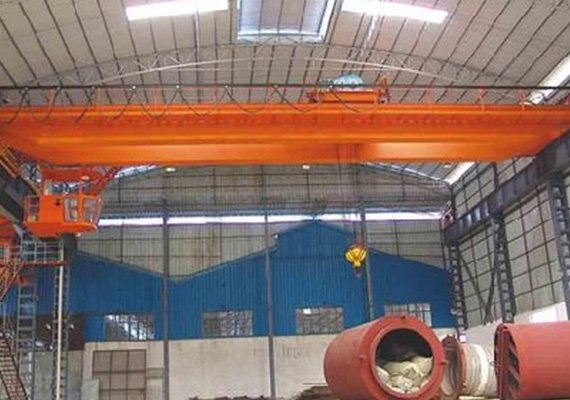
Factory cranes are essential equipment in industrial production, warehousing, and heavy logistics, responsible for lifting, positioning, and transporting materials. Understanding the types, core components, and practical applications of a factory crane is crucial for selecting efficient, safe, and long-lasting solutions.
This guide addresses key industrial concerns, including:
- How to choose the right crane type based on facility layout and load requirements
- How core components affect performance, maintenance, and safety
- Recommended configurations for different industrial applications
What Is a Factory Crane
A factory crane is specifically designed for industrial factories or warehouse environments. Unlike port cranes or construction cranes, factory cranes are characterized by:
- High-frequency operation
- Precise lifting and positioning
- Long-term stability
- Adaptability to complex industrial conditions, such as building span, runway rails, and floor load capacity
Understanding a factory crane involves more than knowing it “can lift loads.” Critical considerations include:
- Whether the equipment design matches operational conditions
- Whether component selection ensures performance and reliability
- Safety and maintenance requirements over time
Types of Factory Crane
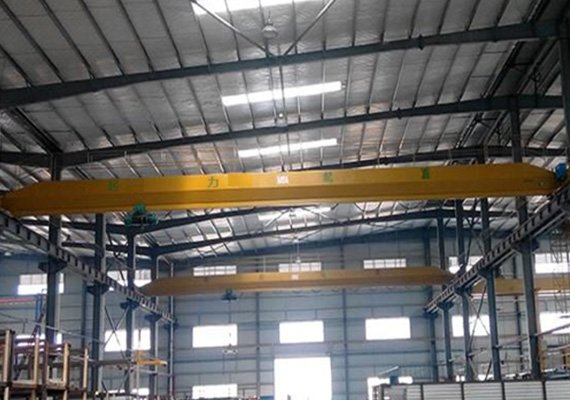
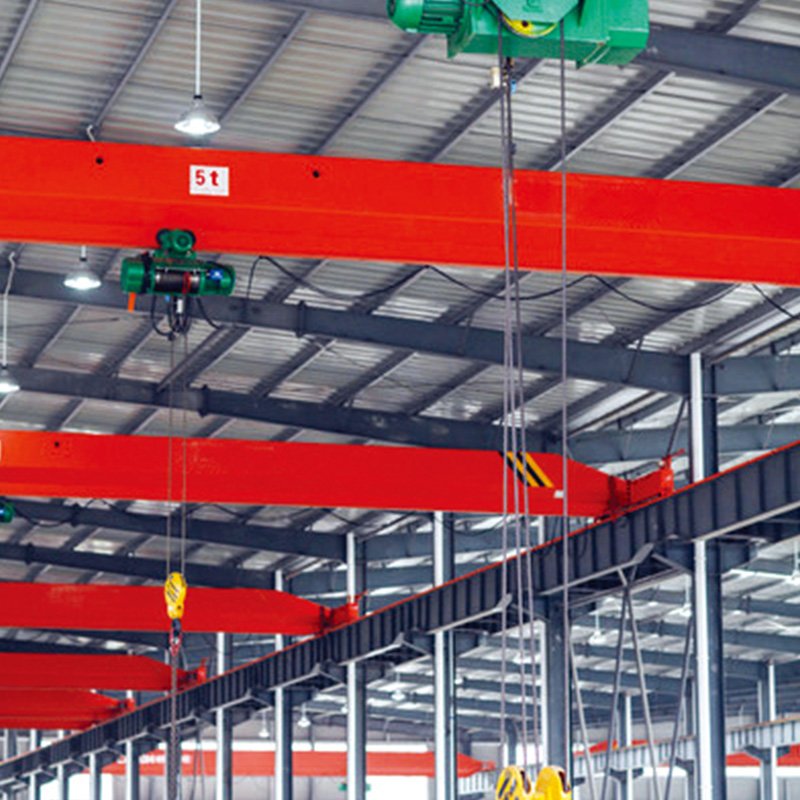
Overhead Crane
Overview: Overhead cranes are commonly installed on factory roof rails and are available as single or double girder designs.
Selection Criteria:
- Single girder cranes suit light to medium loads (≤10t) and limited spans
- Double girder cranes are ideal for heavy loads (≥10t) and wide spans (≥20m)
Applications:
- Small to medium parts handling in manufacturing facilities
- Assembly lines or repetitive operation stations
Considerations:
- Roof load-bearing capacity and crane height must meet specifications
- Single girder cranes have limited span; heavy loads may cause beam deflection
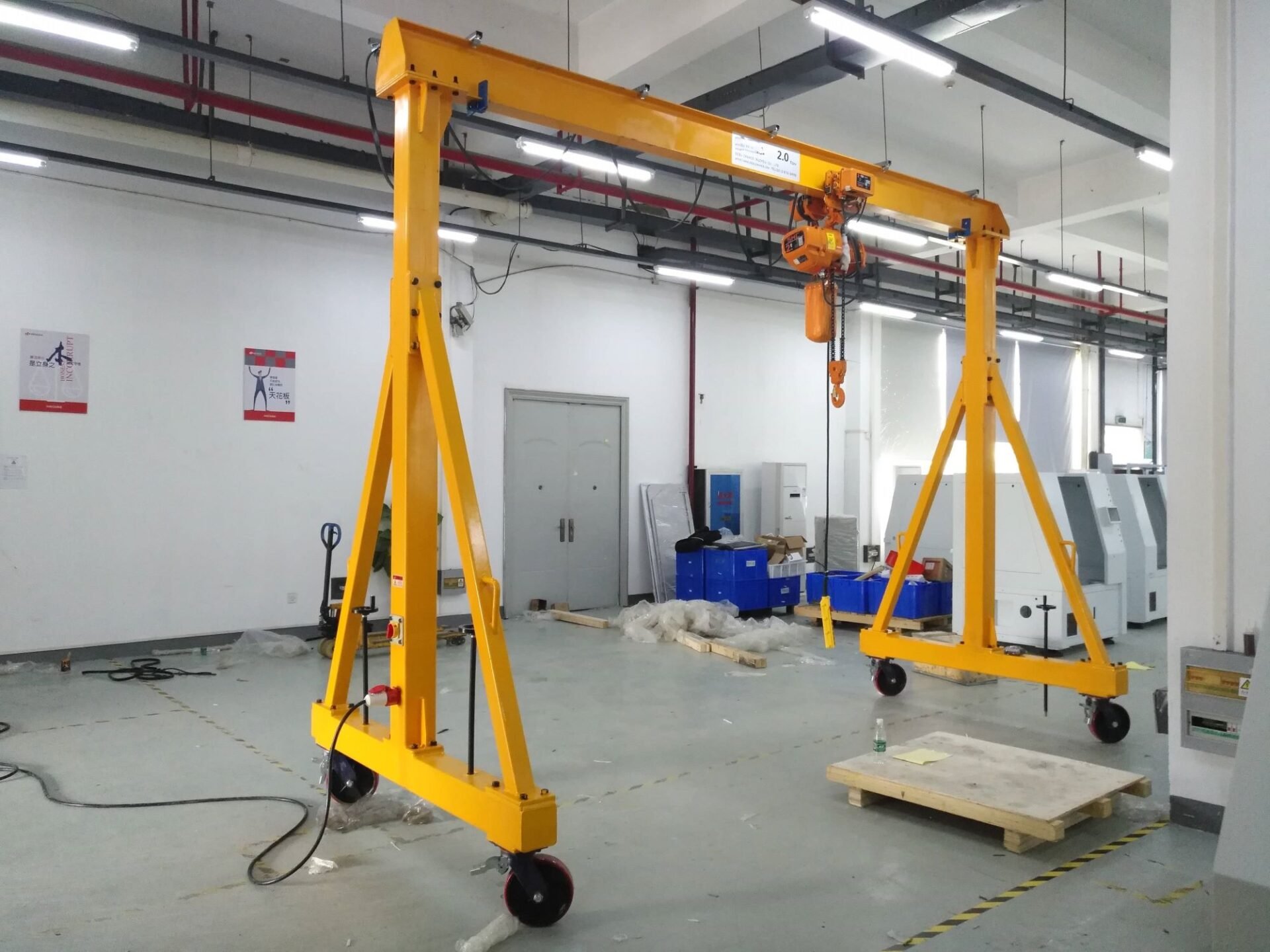
Gantry Crane
Overview: Gantry cranes have a door-like structure and can be used indoors or outdoors with mobility.
Selection Criteria:
- High load and wide span requirements
- Cross-facility or outdoor heavy lifting
- Floor foundation or rail load capacity must be evaluated
Applications:
- Steel, shipbuilding, and heavy machinery assembly
- Outdoor logistics yards
Considerations:
- Frequent movement requires well-designed wheels and leg structures
- Outdoor applications need windproof and corrosion-resistant features
Jib Crane
Overview: Jib cranes use a cantilever or arm structure, covering a limited working area.
Selection Criteria:
- Localized lifting needs (≤5t)
- Single workstation or compact space
Applications:
- Parts assembly lines
- Precision machining workshops
Considerations:
- Arm length and support type determine reach and load capacity
- Suitable for lightweight, repetitive operations
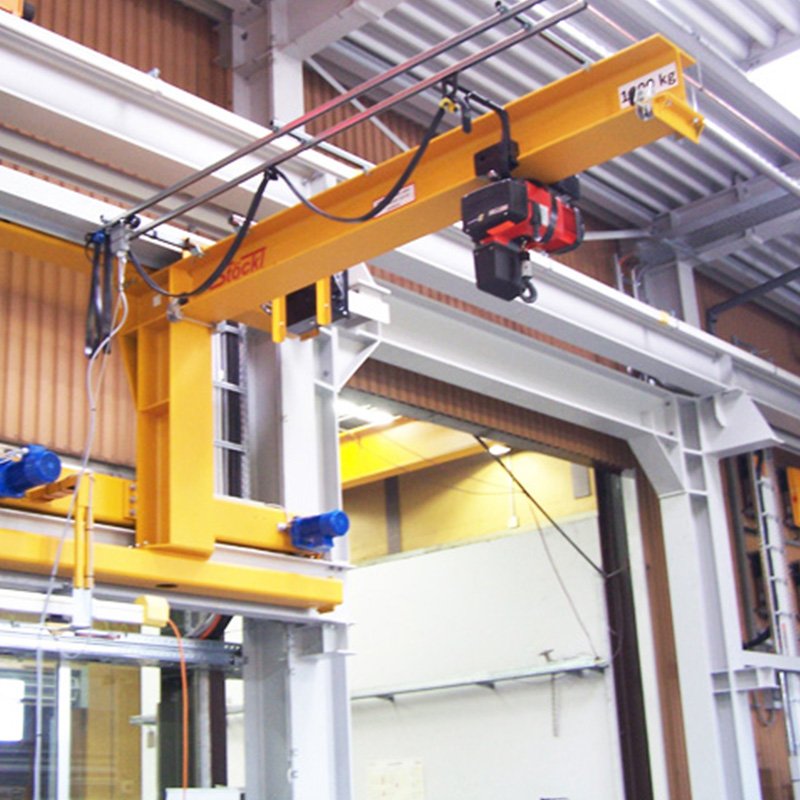
Wall-Mounted & Semi-Gantry Cranes
Overview: These cranes save floor space and are suitable for specific work conditions.
Selection Criteria:
- Limited floor space
- Partially fixed workstations
- Low to medium load (≤10t)
Applications:
- Storage areas or localized assembly stations
- Light material handling
Considerations:
- Wall or support structure must meet load-bearing requirements
- Regular inspection of fixed points is essential
Core Components of a Factory Crane
Structural Components
Includes: Main girder, gantry frame, supporting legs
Impact on performance:
- Main girder span and cross-section affect load stability
- Gantry frame and legs bear dynamic loads, affecting safety
- High-strength steel and proper welding increase service life
Selection Advice:
- High-frequency or heavy-duty operation requires reinforced girders and rigid gantry frames
- Mobile cranes require optimized leg and wheel systems
Lifting and Mechanical Components
Includes: Hoisting motor, wire rope/chain, gear reducer
Impact on performance:
- Hoisting speed, load stability, and operational precision
- Wire rope or chain durability affects service life
- Gear reducer smooths transmission and reduces structural fatigue
Selection Advice:
- High-tonnage applications require high-torque motors and long-life wire ropes
- Frequent start-stop operations benefit from flexible reducers or variable frequency drives
Electrical and Control Components
Includes: Motor drives, variable frequency drives (VFDs), control panels
Impact on performance:
- Precise positioning
- Smooth starts and stops, reducing mechanical shock
- Energy efficiency and maintenance convenience
Selection Advice:
- High-precision assembly or production lines prefer PLC-controlled VFD systems
- Simple material handling may use basic contactor-based control
Safety and Protection Components
Includes: Brakes, limit switches, overload protection, emergency stop
Function:
- Prevent overloading, collision, or over-travel
- Improve operational safety
- Extend crane service life
Selection Advice:
- Heavy-load or wide-span cranes require full limit and emergency braking systems
- Regular inspection and maintenance are essential for long-term reliability
Industrial Applications of Factory Cranes
Manufacturing Facilities
Challenges: Handling heavy parts, frequent lifting, high precision requirements
Solution: Cranes with rigid main beams, stable hoisting, and precise control
Recommendation: Single girder overhead cranes for light-medium loads; double girder overhead or gantry cranes for heavy assembly
Warehousing and Logistics
Challenges: Diverse goods, frequent storage and retrieval, limited space
Solution: Compact, flexible cranes such as gantry or semi-gantry
Recommendation: Optimize runway layout to improve operational efficiency and reduce redundant handling
Heavy Industry
Challenges: Steel, machinery, and automotive plants require high load capacity and continuous operation
Solution: Durable gantry cranes with high load ratings and low maintenance requirements
Recommendation: Evaluate floor load capacity and leg-wheel system; schedule regular lubrication and component inspection
Specialized Conditions
Applications: Nuclear power, chemical, and shipbuilding with high safety standards
Solution: Full safety component integration (brakes, limit switches, overload protection)
Recommendation: Custom structural and control systems to ensure reliability and protection
Key Factors When Choosing a Factory Crane
- Load and Span: Ensure safety factor ≥1.25
- Duty Class / Usage Frequency: Heavy-duty components for frequent operations
- Space and Mobility: Fixed, mobile, or outdoor operations
- Safety and Maintenance: Complete safety components and accessible spare parts
Conclusion
Selecting the right factory crane requires evaluating type, components, and operational conditions, not just lifting capacity. A comprehensive understanding ensures safe, reliable, and efficient long-term operation.
For precise factory crane recommendations, share your project details such as load, span, and site conditions with Yonghao Crane. Email: yonghaoqizhong@163.com