Chinese (Simplified)
 Arabic
 Dutch
Dutch English
 French
 German
 Italian
 Portuguese
 Russian
 Spanish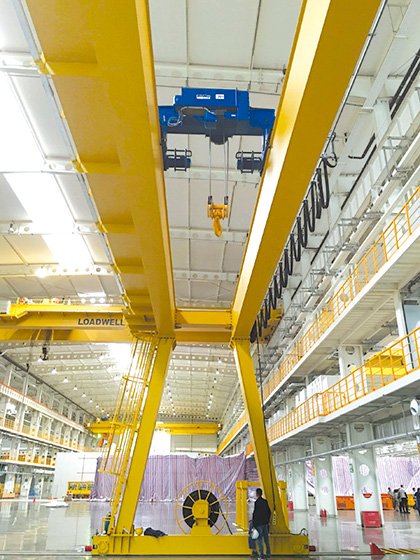
In factories, warehouses, and heavy industrial facilities, overhead cranes play a critical role in material handling. However, many buyers and engineers face the same challenge: understanding the differences between various overhead crane types and selecting the one that truly fits their operational needs.
Choosing the wrong crane type can lead to common problems such as insufficient lifting capacity, installation difficulties caused by building limitations, or increased maintenance costs over time. A clear understanding of overhead crane types is therefore essential for making informed, long-term decisions.
What Is an Overhead Crane
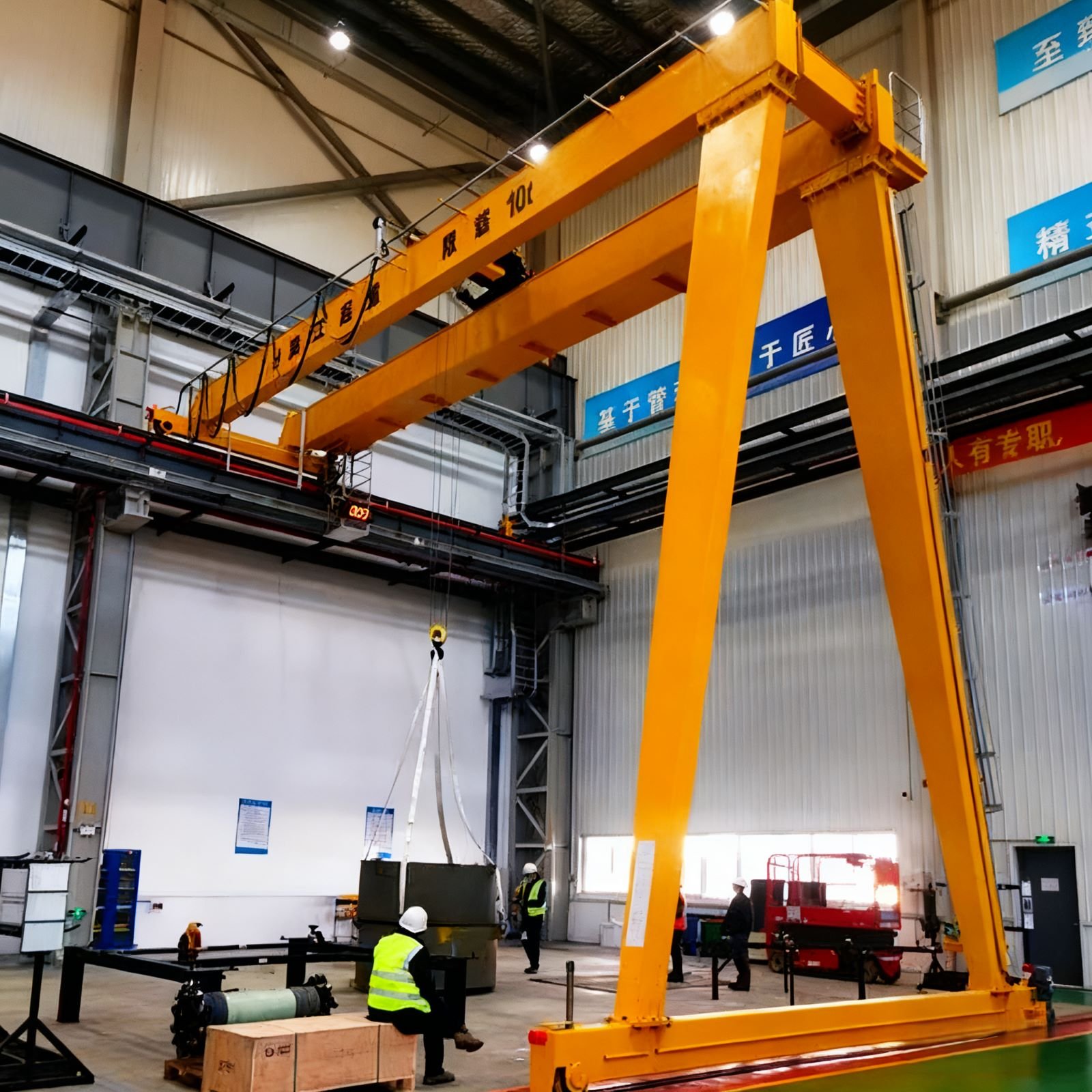
An overhead crane is a lifting system that operates on elevated runways installed within a building structure. Its primary components include:
- Bridge – the main load-carrying structure spanning the workspace
- End trucks – support the bridge and allow longitudinal movement
- Hoist – performs vertical lifting operations
- Runway system – supports and guides crane travel
Compared with gantry cranes or jib cranes, overhead cranes are designed for repetitive, efficient material handling within fixed indoor spaces.
Main Overhead Crane Types Explained
Single Girder Overhead Crane
Structural Characteristics
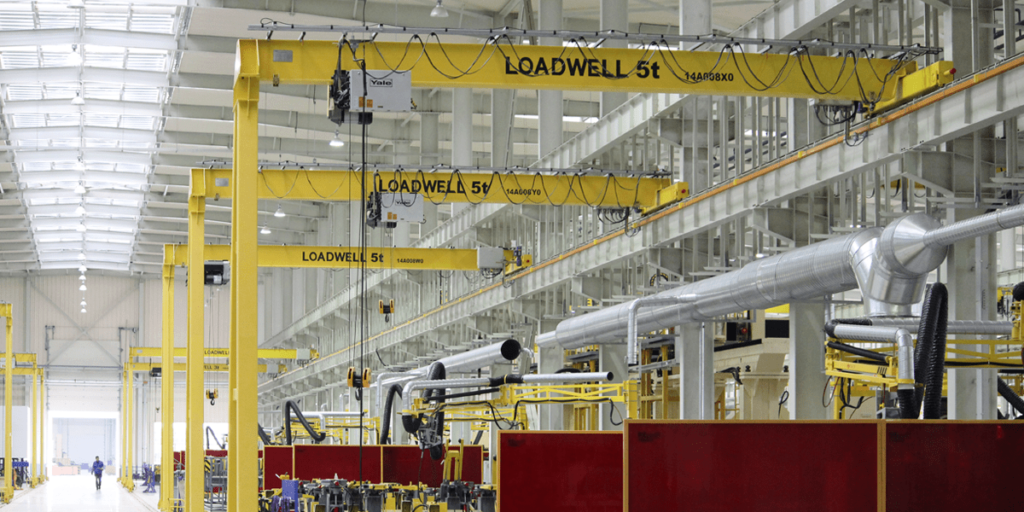
A single girder overhead crane features one main beam, with the hoist typically suspended beneath the girder.
Typical Specifications
- Lifting capacity: 1–20 tons
- Span: usually up to 25 meters
- Duty class: light to medium
Best Applications
- Small to medium manufacturing workshops
- Maintenance areas
- Operations with moderate lifting frequency
Key Advantages
- Lightweight structure
- Lower installation cost
- Efficient for standard material handling tasks
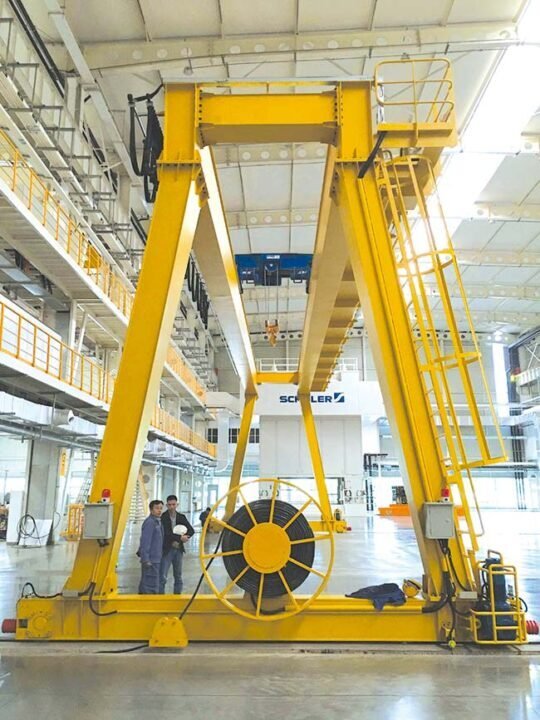
Double Girder Overhead Crane
Structural Characteristics
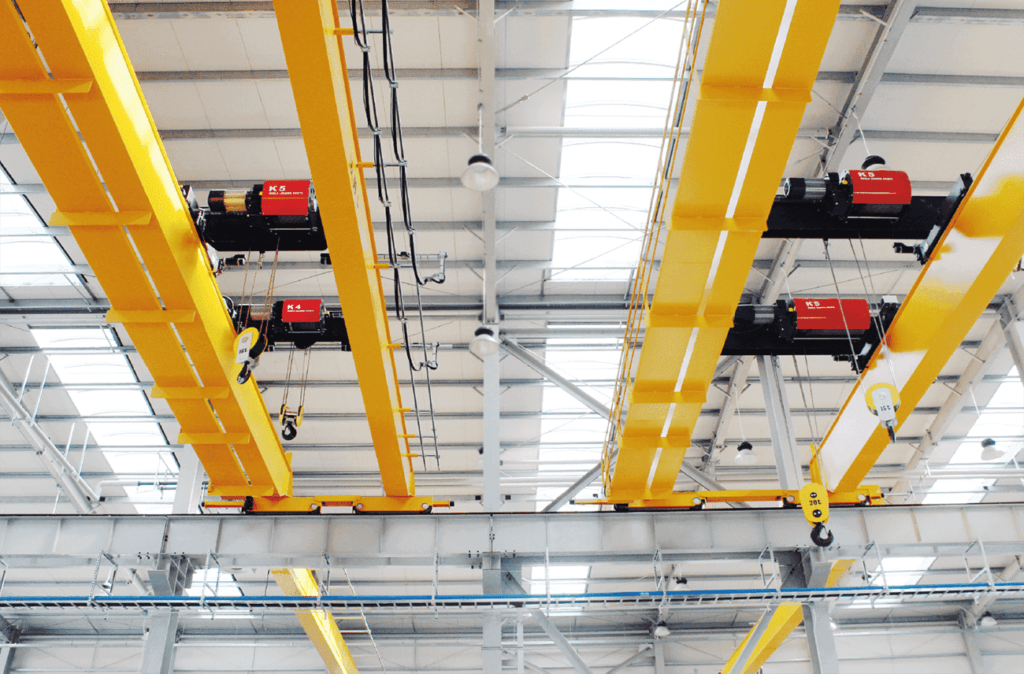
A double girder overhead crane uses two main beams, with the hoist running on rails positioned between them.
Typical Specifications
- Lifting capacity: 10–100+ tons
- Suitable for large spans
- Medium to heavy duty operation
Best Applications
- Steel fabrication
- Metallurgy and heavy machinery plants
- High-duty and continuous lifting operations
Key Advantages
- Higher lifting capacity
- Greater lifting height
- Superior stability for long-term industrial use
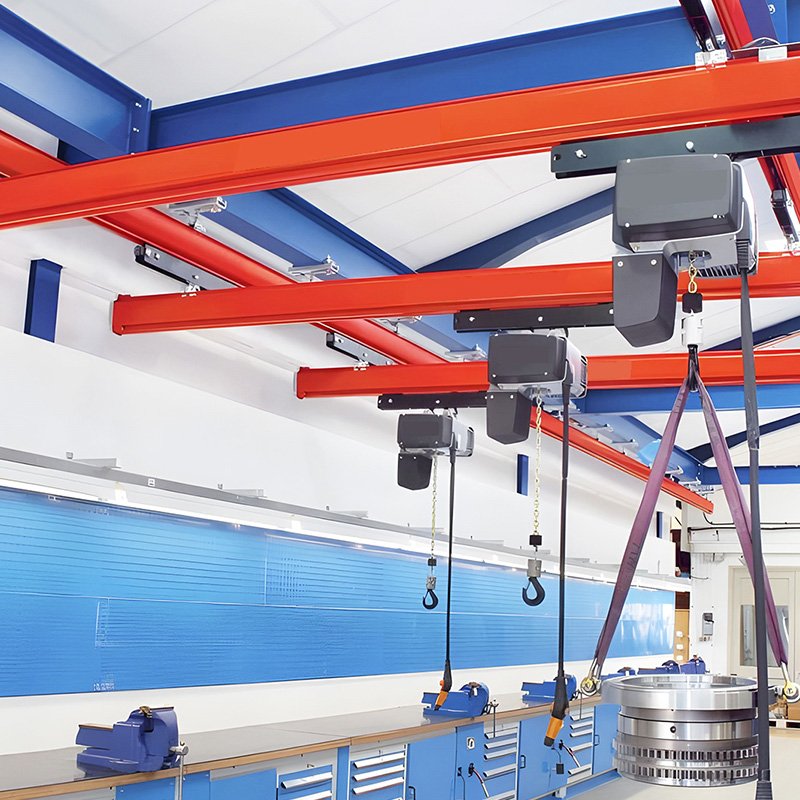
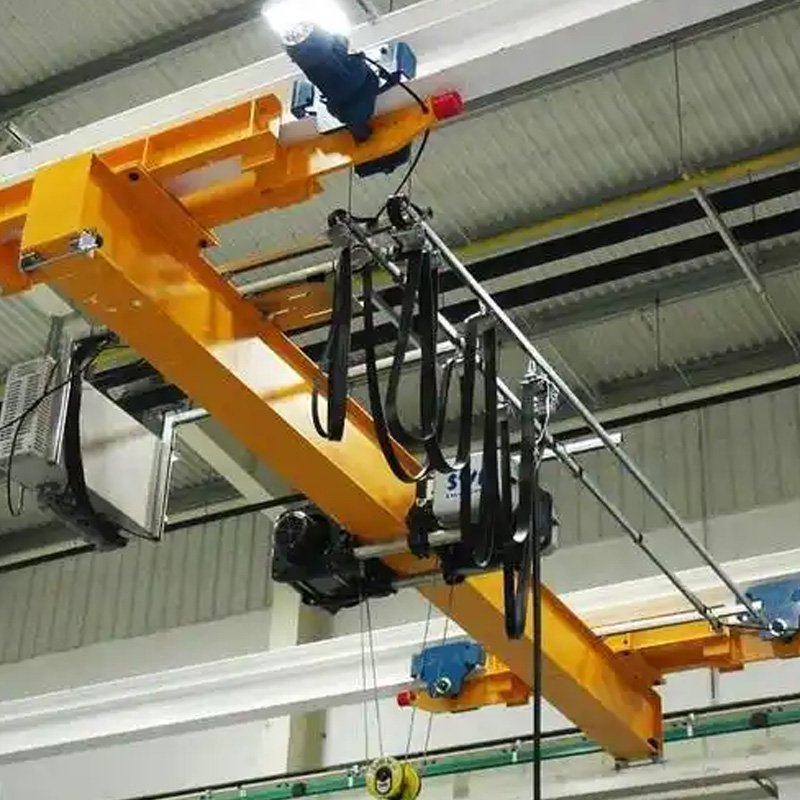
Underhung Overhead Crane
Structural Characteristics
An underhung overhead crane is suspended from the building structure and runs beneath the runway beams rather than on top of them.
Suitable Conditions
- Limited headroom
- No space for floor-supported runway beams
- Light to medium loads
Typical Applications
- Assembly lines
- Light industrial facilities
Important Consideration
The building structure must be capable of supporting both static and dynamic crane loads.
Top-Running Overhead Crane
Structural Characteristics
A top-running overhead crane operates on rails mounted on runway beams supported by columns or building structures.
Best Applications
- Medium to large industrial facilities
- Heavy loads
- Operations requiring long service life
Key Advantages
- High load-bearing capacity
- Proven and widely adopted design
- Suitable for most industrial environments
Comparison of Different Overhead Crane Types
| Comparison Factor | Single Girder | Double Girder | Underhung | Top-Running |
|---|---|---|---|---|
| Lifting capacity | Low–Medium | Medium–High | Low–Medium | Medium–High |
| Initial cost | Lower | Higher | Moderate | Moderate–High |
| Installation | Simple | Complex | Building-dependent | Requires runway beams |
| Duty cycle | Light–Medium | Medium–Heavy | Light–Medium | Medium–Heavy |
How to Choose the Right Overhead Crane Type
When evaluating overhead crane types, consider the following factors:
- Maximum load and duty class
High-frequency or continuous operations typically require double girder or top-running cranes. - Building structure and layout
Ceiling height, column spacing, and load-bearing capacity directly influence crane selection. - Operational frequency and lifespan expectations
A crane designed for long-term heavy use will reduce downtime and maintenance costs. - Total cost of ownership
Initial purchase price should be evaluated alongside long-term reliability and maintenance requirements.
Common Applications of Overhead Crane Types
- Manufacturing workshops – component handling and assembly
- Warehouses – palletized and bulk material movement
- Steel and metallurgy plants – heavy equipment and steel handling
- Machinery production lines – precise positioning and repetitive lifting
Each application benefits from selecting the most suitable overhead crane type based on operational demands.
Safety and Maintenance Considerations
- Perform routine inspections of girders, end trucks, and connections
- Never exceed rated lifting capacities
- Establish maintenance schedules based on crane type and duty class
- Proper crane selection significantly reduces long-term safety risks
Conclusion
Understanding the differences between overhead crane types is essential for achieving safe, efficient, and cost-effective lifting operations. A well-matched crane type not only improves productivity but also extends equipment service life and minimizes operational risk. If you need a complete overhead crane solution, contact Yonghao Crane at yonghaoqizhong@163.com.