Chinese (Simplified)
 Arabic
 Dutch
Dutch English
 French
 German
 Italian
 Portuguese
 Russian
 Spanish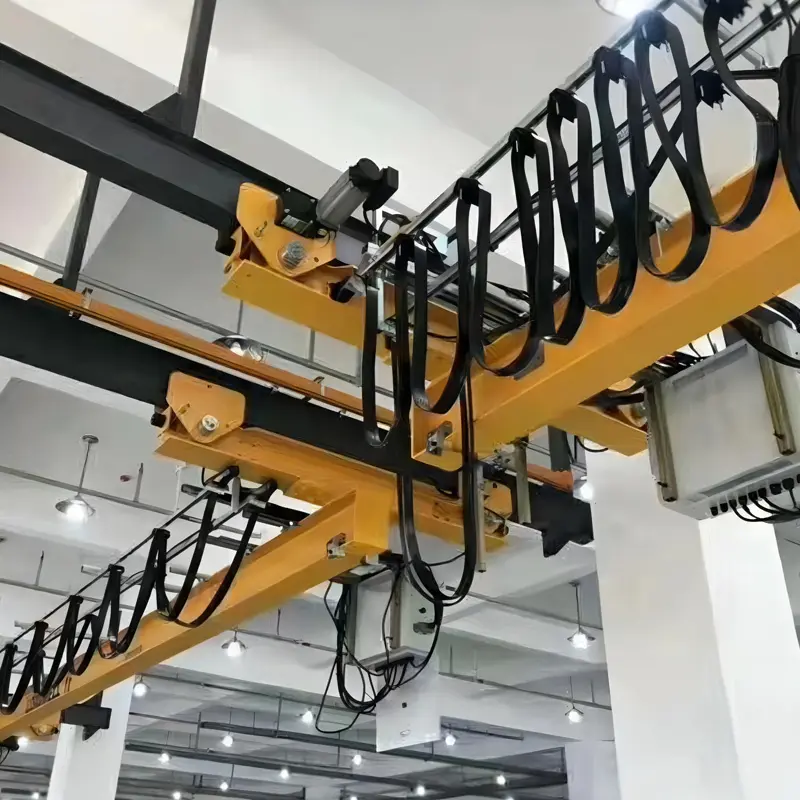
In modern industrial environments, jib cranes have become essential lifting solutions in workshops, warehouses, and production lines. Compact and flexible, they can handle both horizontal and vertical lifting in confined spaces.
The performance of jib crane components directly affects the safety, operational efficiency, and lifespan of the crane. Understanding the functions, selection criteria, and maintenance practices for each component helps reduce maintenance costs and improve productivity.
This guide provides a comprehensive overview of key jib crane components, their selection standards, maintenance tips, and practical applications for industrial users.
1. Overview of Jib Crane Components
The main jib crane components include:
- Jib Arm
- Mast / Support Column
- Slew Bearing / Rotating Mechanism
- Hoist and Trolley
- Base / Foundation
Each component plays a critical role in the crane system:
- The jib arm determines the working radius and load capacity.
- The mast provides structural stability.
- The rotating mechanism enables horizontal rotation.
- The hoist and trolley handle the lifting operations.
- The base ensures overall safety and secure installation.
2. Detailed Analysis of Key Components
2.1 Jib Arm
Function: Supports the load and the hoist, enabling horizontal lifting.
Selection Guidelines:
- Typically made of high-strength steel to ensure load-bearing capacity and resistance to bending.
- Length should match the required working radius and workspace.
- For high-frequency or heavy-duty operations, reinforced or thicker arms are recommended.
Example Specifications:
- Light-duty workshop jib crane: 1–3t load, 3–6m arm length
- Medium-duty crane: 5t load, 6–9m arm length, heat-treated steel recommended
2.2 Mast / Support Column
Function: Supports the entire jib arm, ensuring stability.
Selection Guidelines:
- Height should align with jib arm length.
- Material must withstand arm-end loads and torque.
- Secure connection to foundation is critical for safety.
Maintenance Tips: Regularly check bolt tightness and anti-corrosion coatings.
2.3 Slew Bearing / Rotating Mechanism
Function: Enables horizontal rotation of the jib arm, covering the full working radius.
Selection Guidelines:
- Load capacity must match the maximum jib arm load.
- Rotation precision affects operational smoothness.
- Common options include roller or ball bearings; regular lubrication is necessary.
Maintenance Tips:
- Inspect lubrication and bearings every 3–6 months.
- Prevent increased rotational resistance to avoid excessive torque.
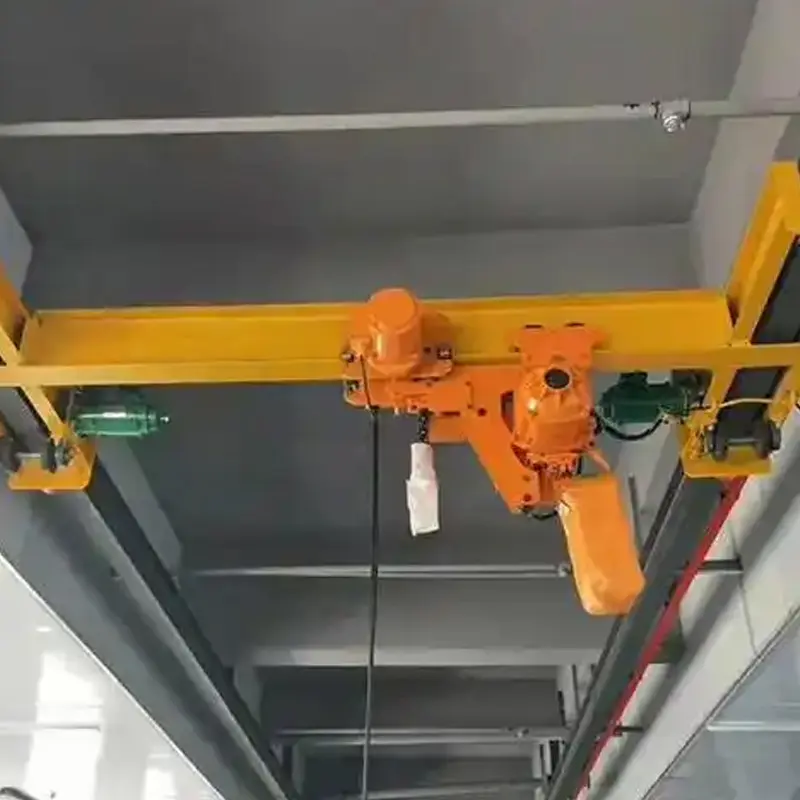
2.4 Hoist and Trolley
Function: Core component for lifting and transporting loads.
Selection Guidelines:
- Choose manual or electric hoist depending on load and operation frequency.
- Speed, braking performance, and load capacity must meet operational requirements.
- Trolley track and wheel spacing must match the jib arm and load.
Maintenance Tips:
- Regularly inspect wire ropes, chains, and brakes.
- Lubricate trolley wheels to ensure smooth operation.
2.5 Base / Foundation
Function: Secures the crane, ensuring safety and stability.
Selection Guidelines:
- Foundation load capacity must exceed the crane’s maximum load.
- Installation can be floor-mounted or wall-supported.
- For special environments (e.g., chemical plants, outdoor), corrosion-resistant or anti-vibration designs are recommended.
3. Selection Criteria for Jib Crane Components
When selecting jib crane components, consider:
- Load Capacity: Maximum load and duty cycle
- Working Radius: Jib arm length and rotation range
- Environmental Conditions: Indoor/outdoor, corrosion, water, explosion resistance
- Long-Term Costs: Material durability, maintenance frequency, and installation complexity
Practical Suggestions:
- Light-duty workshops: light jib arm + manual hoist
- Medium to heavy industrial operations: reinforced steel arm + electric hoist + high-precision rotation mechanism
4. Maintenance and Safety Tips
- Regularly inspect jib crane components for bolts, welds, bearings, and wire ropes.
- Lubricate rotating mechanisms and hoists.
- Follow strict operational standards: avoid overloads, off-center lifting, and tipping.
- Keep maintenance logs to improve management efficiency and equipment lifespan.
5. Common Applications and Case Studies
| Application | Jib Crane Components Configuration | Benefits | Results |
|---|---|---|---|
| Workshop assembly line | Medium jib arm + electric hoist + rotation mechanism | Covers entire workspace, improves efficiency | 20% faster operations, 50% fewer safety incidents |
| Warehouse handling | Light jib arm + manual hoist + trolley track | Flexible, low-noise | 15% cost savings, 30% reduced wear |
| Chemical plant | Reinforced arm + corrosion-resistant rotating mechanism + electric hoist | Corrosion-proof, explosion-proof, durable | 30% longer service life, lower maintenance frequency |
6. Conclusion
Proper selection and maintenance of jib crane components significantly improve operational safety, efficiency, and durability.
Ready to equip your facility with the perfect jib crane? Contact Yonghao Crane ( yonghaoqizhong@163.com )today with your operational requirements, load, and environment details. Our team will provide a customized crane solution, complete with specifications, CAD drawings, and a detailed quote.