Chinese (Simplified)
 Arabic
 Dutch
Dutch English
 French
 German
 Italian
 Portuguese
 Russian
 Spanish
A warehouse overhead crane is an essential tool in modern warehousing and logistics, used for lifting, transporting, and positioning heavy loads efficiently. Choosing the right crane not only impacts operational efficiency but also directly affects workplace safety and long-term operational costs.
This guide covers facility assessment, crane type selection, component considerations, and safety and maintenance practices, providing a practical roadmap for industrial decision-makers.
Assessing Your Warehouse Requirements
Load Capacity
When selecting a warehouse overhead crane, the first consideration is maximum lifting weight and average operational load. Recommended guidelines include:
- Maximum lifting weight = planned load × safety factor (1.25–1.5)
- Choose hoisting motors, wire ropes, or chains that match the expected workload
Proper load assessment prevents overloading, ensuring safety and extending crane service life.
Span and Coverage Area
The crane’s span and runway layout determine the operational coverage:
- Warehouse width dictates single or double girder configuration
- Facility length affects runway length and crane travel distance
- Hook height and underhook clearance influence racking and stacking
Careful planning avoids blind spots and reduces unnecessary handling.
Frequency and Duty Cycle
The operating frequency of a warehouse overhead crane directly affects:
- Motor and gearbox load
- Structural component fatigue
- Maintenance cycles and long-term reliability
Select a crane duty class according to ISO or CMAA standards based on daily usage.
Warehouse Environment
Environmental conditions play a critical role in crane selection:
- Temperature and humidity: High heat or humidity may require corrosion-resistant or heat-resistant materials
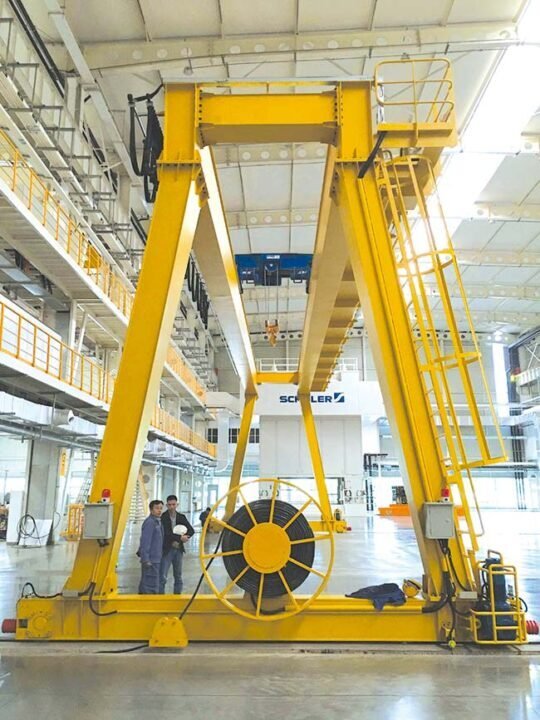
- Floor load capacity: Impacts runway and gantry support design
- Special conditions: Dust, chemical exposure, or explosive environments require specific safety measures
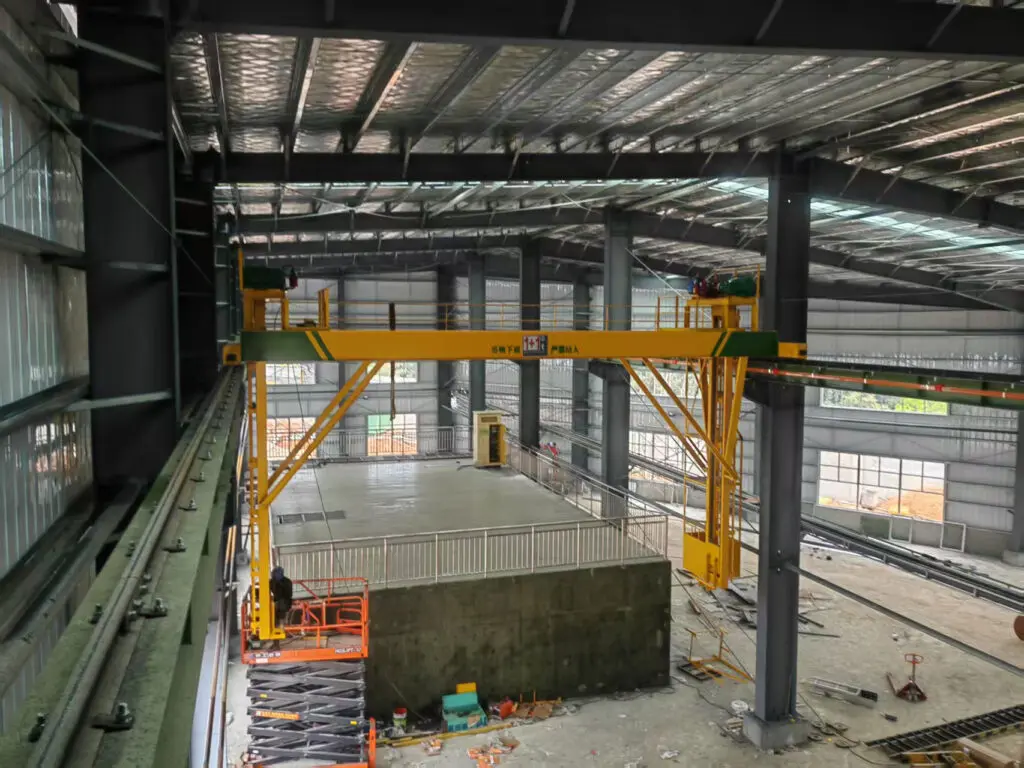
Types of Warehouse Overhead Crane
Single Girder Overhead Crane
- Suitable for: Light to medium loads (≤10t), small spans
- Advantages: Lower installation cost, smaller footprint, easier maintenance
- Considerations: Limited span and load capacity, not ideal for continuous heavy-duty operation
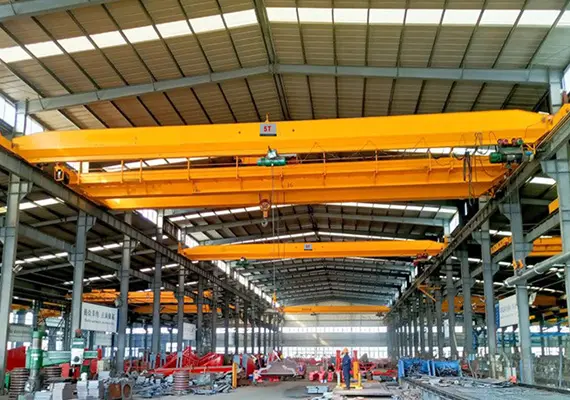
Double Girder Overhead Crane
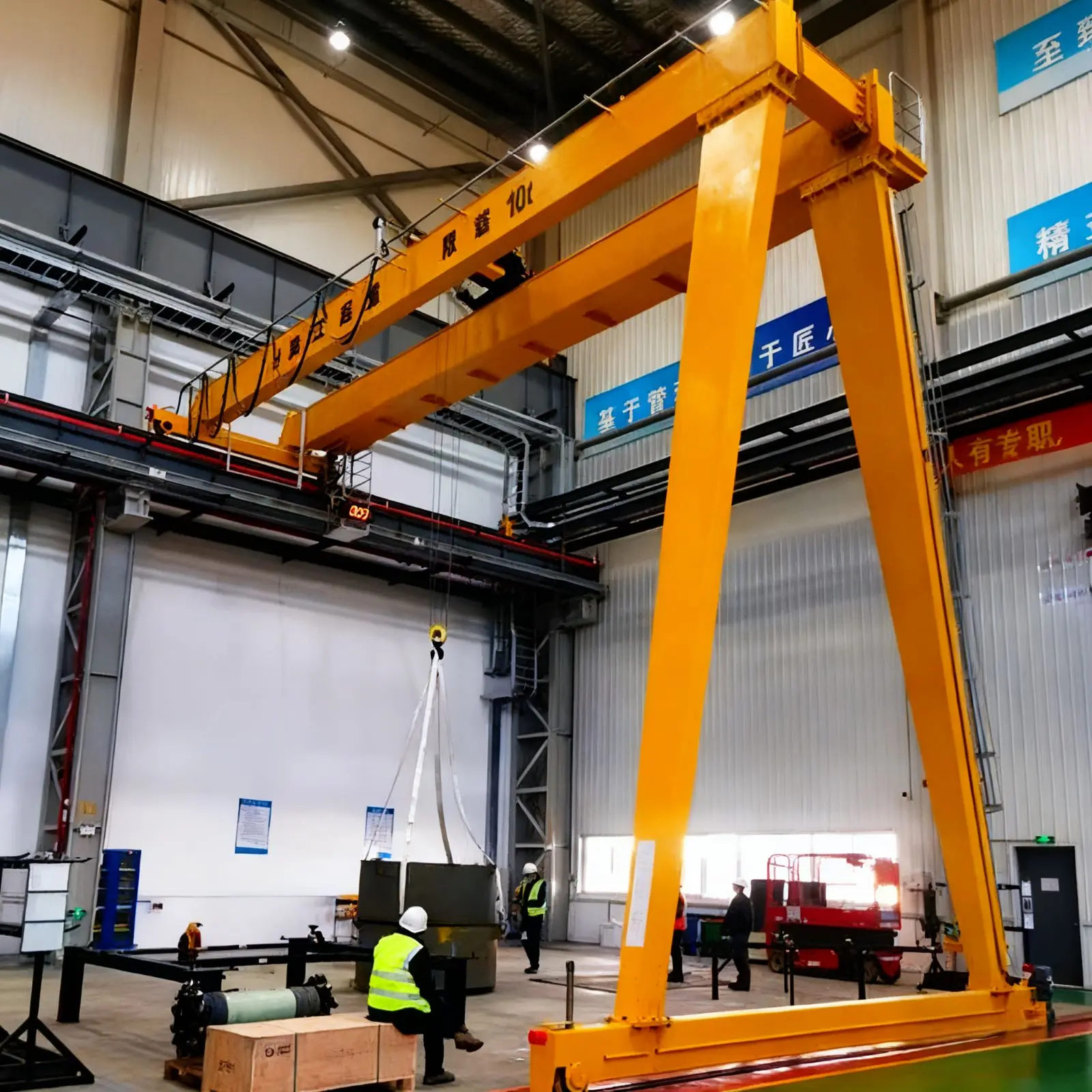
- Suitable for: Heavy loads (≥10t), large spans
- Advantages: High load capacity, greater stability, longer service life
- Considerations: Higher upfront cost, more complex installation, runway load evaluation required
Specialized Cranes
- Top-running crane: Rail mounted on building roof, supports higher loads and longer spans
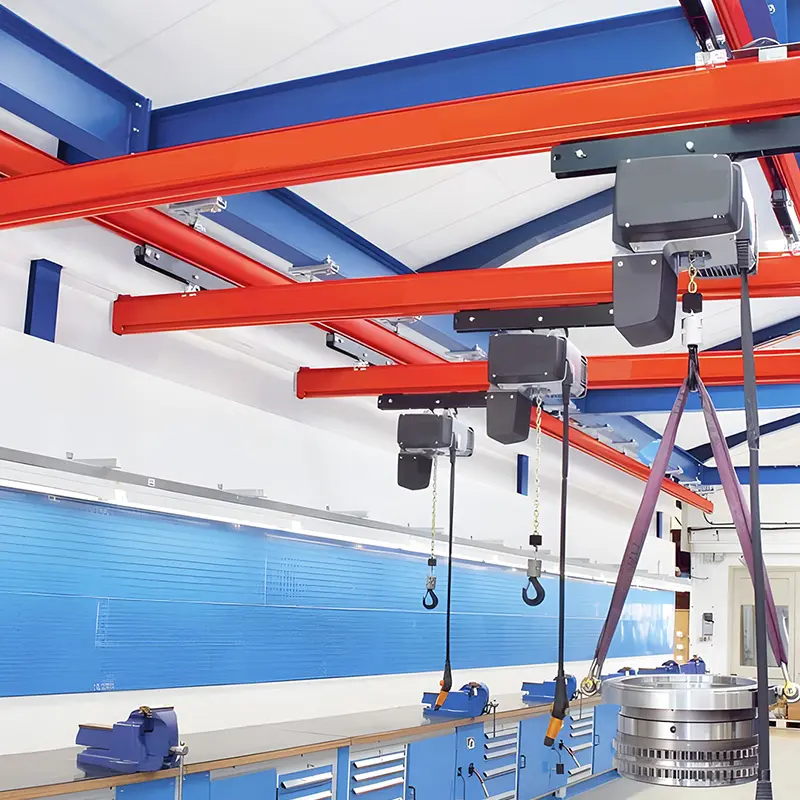
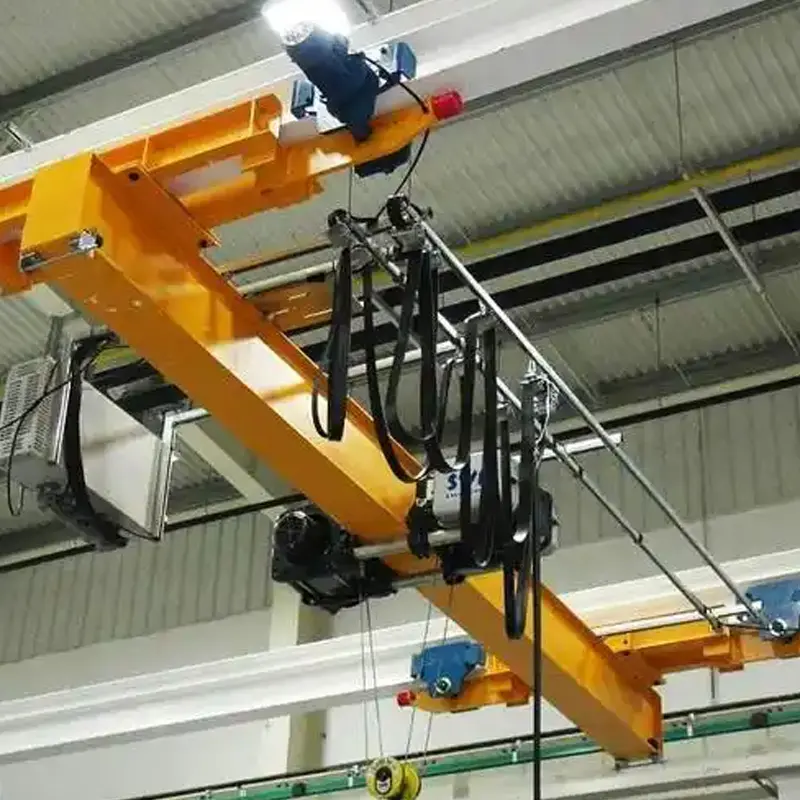
- Under-running crane: Rail mounted under the runway, saves vertical space, suitable for low-clearance warehouses
- Custom solutions: Designed for tight layouts or heavy-duty, high-frequency applications
Key Components to Consider
Hoisting Mechanism
- Motor type: AC/DC, variable frequency drive (VFD)
- Wire rope/chain: Wear resistance and lifespan
- Gear reducer: Smooth transmission, load stability
- Recommendation: For high-frequency operations, select durable motors, wire ropes, and matched reducers
Structural Components
- Main girder and support frame: Determine load capacity and span stability
- Material and welding: High-strength steel and quality welding extend service life
- Recommendation: Reinforced beams and rigid support for heavy or wide-span applications
Electrical and Control Systems
- Control types: Manual, semi-automatic, PLC, or VFD control
- Impact: Smooth start/stop, precise positioning, operational efficiency
- Recommendation: High-precision assembly lines require PLC + VFD, standard warehouses may use basic contactor control
Safety Components
- Key devices: Limit switches, brakes, overload protection, emergency stop
- Function: Prevent overloading, collisions, and over-travel, ensuring operator safety
- Recommendation: Heavy-load or frequent-use cranes must include full safety components with regular inspections
Installation and Maintenance Considerations
- Runway layout optimization: Minimize redundant handling and improve efficiency
- Routine maintenance: Lubrication, inspections, and component replacement
- Long-term reliability strategy: Maintenance schedule based on load and duty cycle
- Brand advantage: Choosing a supplier with technical support and spare parts availability reduces downtime risk
Cost vs. Value Analysis
- Initial investment vs. long-term operational cost
- High-performance components may have higher upfront cost but reduce failures and downtime
- Evaluate cost-effectiveness based on warehouse load and operational frequency to maximize long-term value
Conclusion
Selecting the right warehouse overhead crane requires considering load, span, frequency, warehouse environment, and safety components, not just lifting capacity. Making an informed choice ensures efficient operations, safety, and reduced maintenance costs over the crane’s lifetime.
To receive a tailored warehouse overhead crane solution, provide your facility’s load, span, and site conditions to Yonghao Crane. Our team will deliver professional recommendations and customized plans. Email: yonghaoqizhong@163.com