Chinese (Simplified)
 Arabic
 Dutch
Dutch English
 French
 German
 Italian
 Portuguese
 Russian
 Spanish
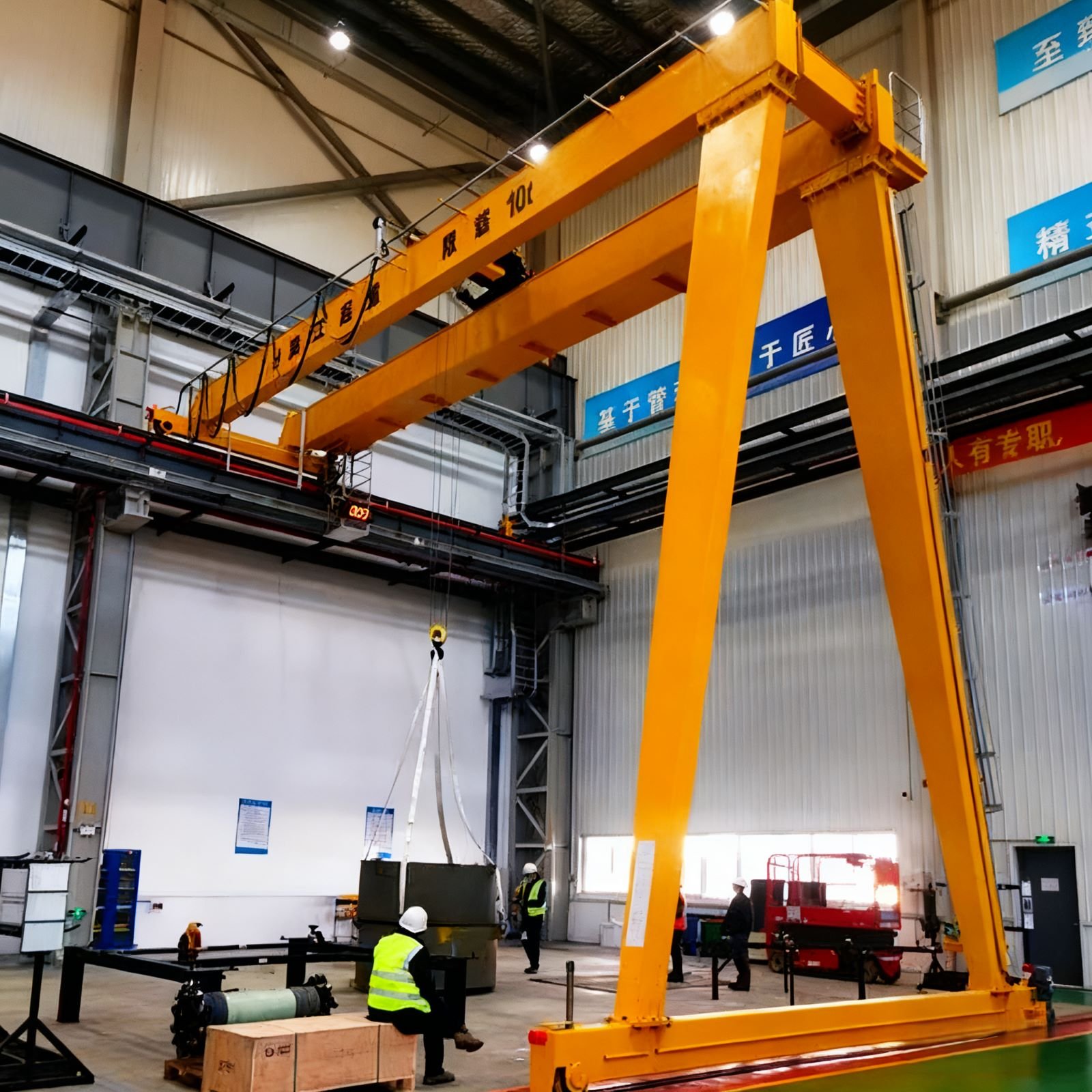
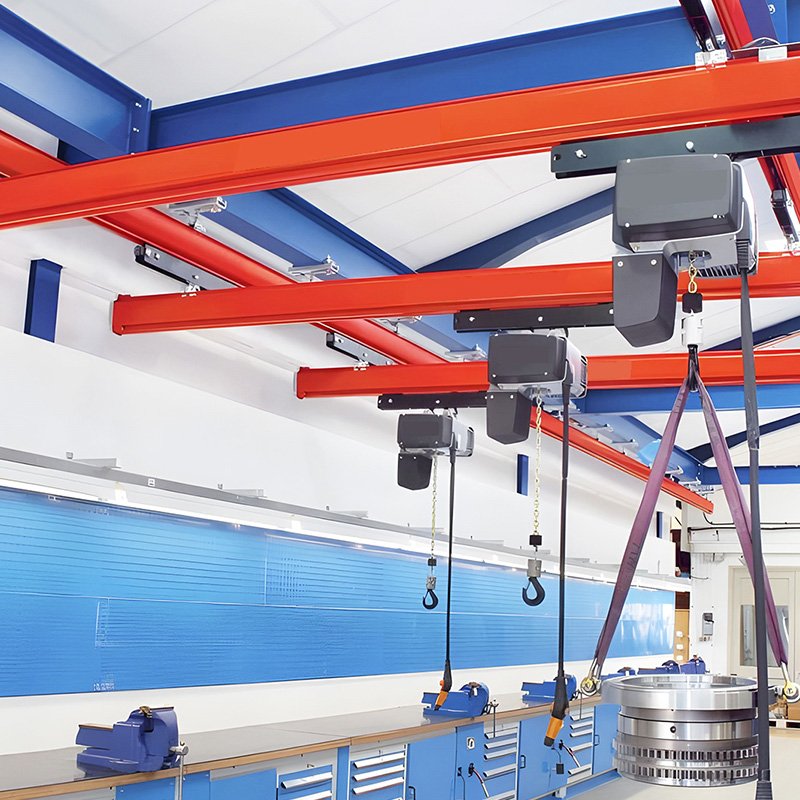
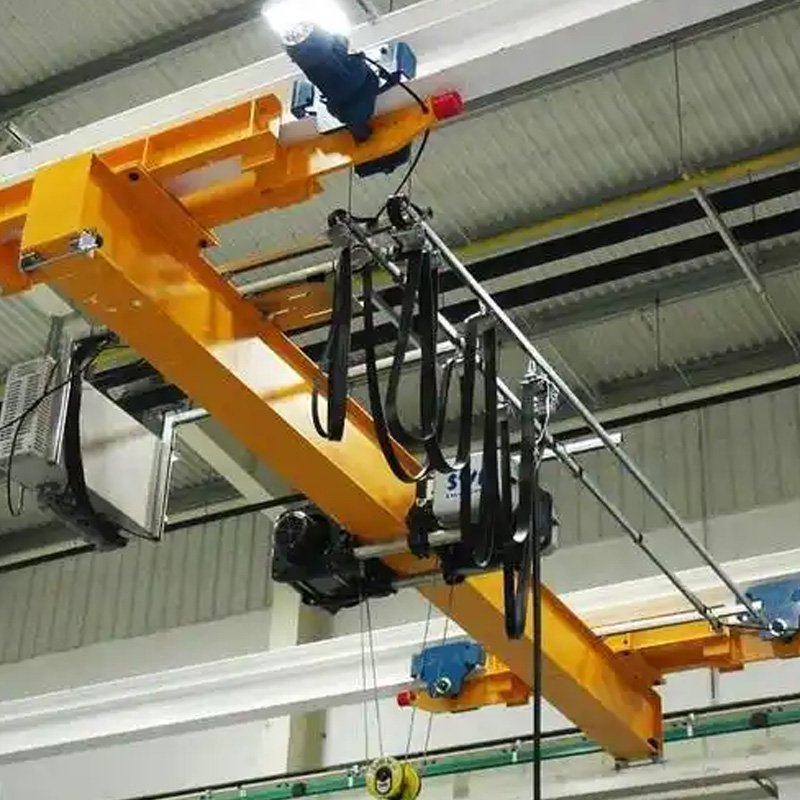
Gantry cranes are widely used in industrial environments where heavy loads must be lifted, moved, and positioned with precision. Behind their visible structure lies a complete system made up of carefully coordinated gantry crane components, each responsible for a specific function related to load bearing, motion control, safety, and long-term reliability.
Understanding how these components are structured and how they function as a system is essential when evaluating crane designs, comparing configurations, or assessing long-term operating value. Differences in component design and integration often explain why cranes with similar ratings can perform very differently in real-world applications.
What Are Gantry Crane Components
Gantry crane components refer to all mechanical, structural, electrical, and safety elements that together form a functional gantry crane system. These components are not independent parts but interconnected elements designed to operate under defined loads, duty cycles, and environmental conditions.
In industrial practice, gantry crane components are commonly grouped into four categories:
- Structural components responsible for load bearing and stability
- Lifting and mechanical components that generate motion and transfer force
- Electrical and control components that regulate operation and precision
- Safety and protection components that manage operational risks
Each category addresses a different layer of system performance, and all are required for reliable crane operation.

Structural Gantry Crane Components
Structural gantry crane components form the load-bearing framework of the entire system. They transfer static loads from lifted goods as well as dynamic forces generated during acceleration, braking, and travel.
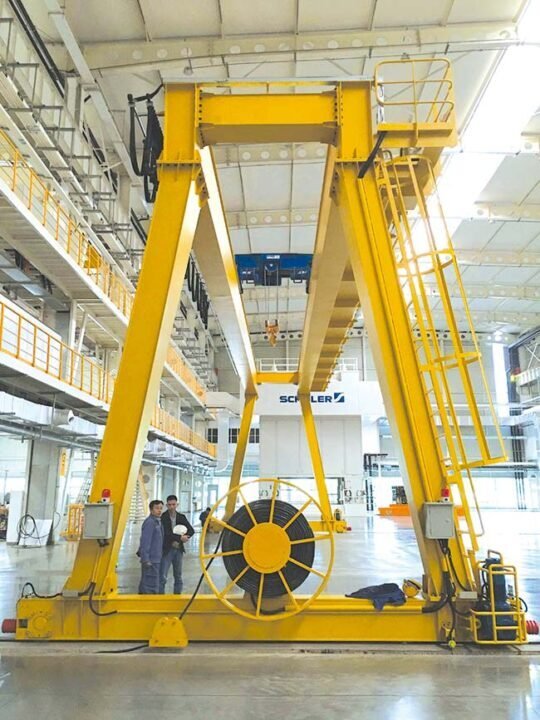
Gantry Frame and Steel Structure
The gantry frame is the primary structural assembly of the crane. It supports the main beam, lifting system, and traveling mechanisms while maintaining overall rigidity. Structural integrity at this level directly affects deformation under load, vibration behavior, and fatigue resistance over long service periods.
In industrial applications, frame design is typically influenced by lifting capacity, span, duty cycle, and site constraints rather than appearance or material thickness alone.
Gantry Legs and End Trucks
Gantry legs connect the main structure to the ground or rail system. They carry vertical loads and stabilize the crane during lifting and travel operations. When the crane is designed to move, end trucks and wheel assemblies allow controlled horizontal motion.
The interaction between gantry legs, end trucks, and foundation conditions plays a significant role in running smoothness and long-term structural alignment.
Main Beam and Load-Carrying Structure
The main beam is one of the most critical gantry crane components, as it directly supports the lifting mechanism and payload. Beam stiffness and structural form determine how the crane responds to load deflection and dynamic forces.
In practical engineering, the main beam is designed to balance strength, rigidity, and efficiency rather than maximizing weight or material usage.
Lifting and Mechanical Gantry Crane Components
Lifting and mechanical components convert electrical power into controlled lifting and travel movements. Their performance influences operational smoothness, positioning accuracy, and mechanical wear.
Hoisting Mechanism
The hoisting mechanism enables vertical movement of loads and typically includes a motor, reducer, drum, and lifting medium. Its design affects lifting speed, load stability, and adaptability to different operating conditions.
Consistent performance under varying load levels is a key requirement for industrial lifting systems.
Wire Rope or Chain System
Wire ropes or chains directly carry the lifted load and represent one of the most safety-critical gantry crane components. Their specification, construction, and working life significantly affect system reliability.
Although structurally simple, these components operate under constant tension and fatigue, making correct configuration essential in industrial use.
Gear Reducer and Transmission System
Gear reducers regulate speed and torque transmission between the motor and lifting or traveling mechanisms. Well-matched transmission systems reduce shock loads and improve motion control, contributing to smoother operation and reduced mechanical stress.

Electrical and Control Gantry Crane Components
Electrical and control systems govern how the crane responds to operator commands and load conditions. They influence not only performance but also energy efficiency and operational consistency.
Electric Motors and Drive System
Electric motors provide the driving force for lifting and travel movements. Their characteristics affect acceleration behavior, torque output, and long-term operating stability.
Motor selection is typically aligned with load requirements, duty cycles, and environmental conditions rather than rated capacity alone.
Control System and Electrical Panels
Control panels integrate power distribution, signal processing, and system protection. Stable electrical architecture reduces fault rates and ensures coordinated operation between lifting, traveling, and braking functions.
Variable Frequency Drive Technology
Modern gantry crane components increasingly incorporate variable frequency drive systems. These allow controlled speed regulation, smoother start and stop cycles, and improved positioning accuracy while reducing mechanical impact on structural and transmission components.
Safety and Protection Gantry Crane Components
Safety-related components manage abnormal conditions and operational risks. Their importance becomes evident during unexpected events rather than normal operation.
Braking System
Braking systems control motion during stopping and holding operations. Reliable braking performance is essential for maintaining load stability and preventing unintended movement.
Limit Switches and Overload Protection
Limit switches prevent over-travel, while overload protection systems restrict lifting beyond safe capacity. These components act as safeguards against operating conditions that could damage equipment or compromise safety.
Emergency Stop and Auxiliary Safety Devices
Emergency stop functions and additional safety devices provide immediate response in critical situations. Though often overlooked during routine operation, they form a fundamental layer of operational protection.
Optional and Customized Gantry Crane Components
Different industrial environments impose different requirements on gantry crane systems. Environmental exposure, operating frequency, and control preferences often require adjustments to standard configurations.
Customized gantry crane components allow better alignment between equipment design and actual operating conditions, improving reliability and service life.
Gantry Crane Components as an Integrated System
No single component defines crane performance on its own. Structural elements, mechanical systems, electrical controls, and safety devices must operate under a unified design logic.
System-level coordination ensures that loads are transferred efficiently, movements remain controlled, and risks are managed throughout the crane’s service life.
Key Considerations When Evaluating Gantry Crane Components
When reviewing gantry crane designs or specifications, industrial buyers typically focus on:
- Component configuration transparency
- Compatibility with actual operating conditions
- Maintainability and spare parts availability
- Technical support and engineering capability
These factors often have a greater long-term impact than nominal performance ratings.
Conclusion
A gantry crane’s reliability and performance depend on the design and integration of its gantry crane components. Structural stability, mechanical efficiency, precise control, and effective safety protection together determine how the system performs over years of operation.
Clear understanding of these components provides a solid foundation for evaluating crane solutions and identifying configurations suitable for demanding industrial environments.
To receive tailored gantry crane component solutions, send your project information including load, span, and site conditions to Yonghao. Email: yonghaoqizhong@163.com