Chinese (Simplified)
 Arabic
 Dutch
Dutch English
 French
 German
 Italian
 Portuguese
 Russian
 Spanish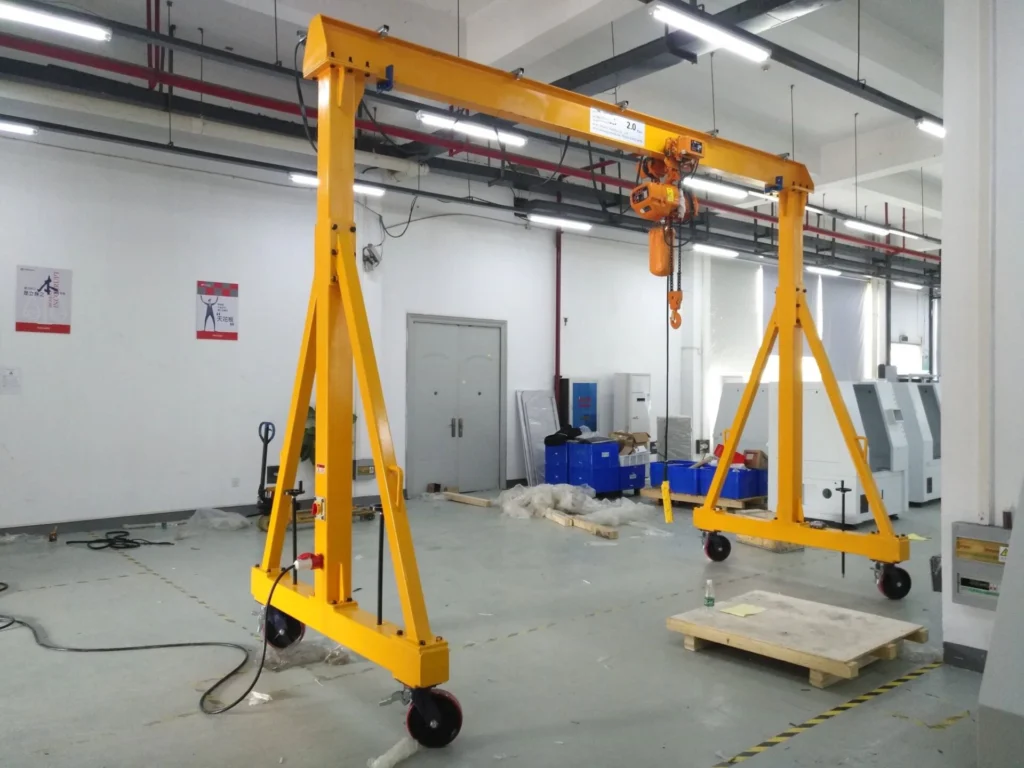
In modern industrial and construction environments, efficient and safe material handling systems are crucial for productivity and cost control. The mobile portal crane, a versatile and movable type of portal crane, is widely used due to its quick deployment, flexible mobility, high load capacity, and customizable design. It finds applications across manufacturing plants, ports, warehouses, and construction sites.
This guide provides engineers, plant managers, and potential buyers with an authoritative overview of mobile portal crane, covering design principles, key components, applications, performance specifications, and maintenance strategies. It helps readers make informed decisions regarding selection, installation, and operation.
1. What is a Mobile Portal Crane?
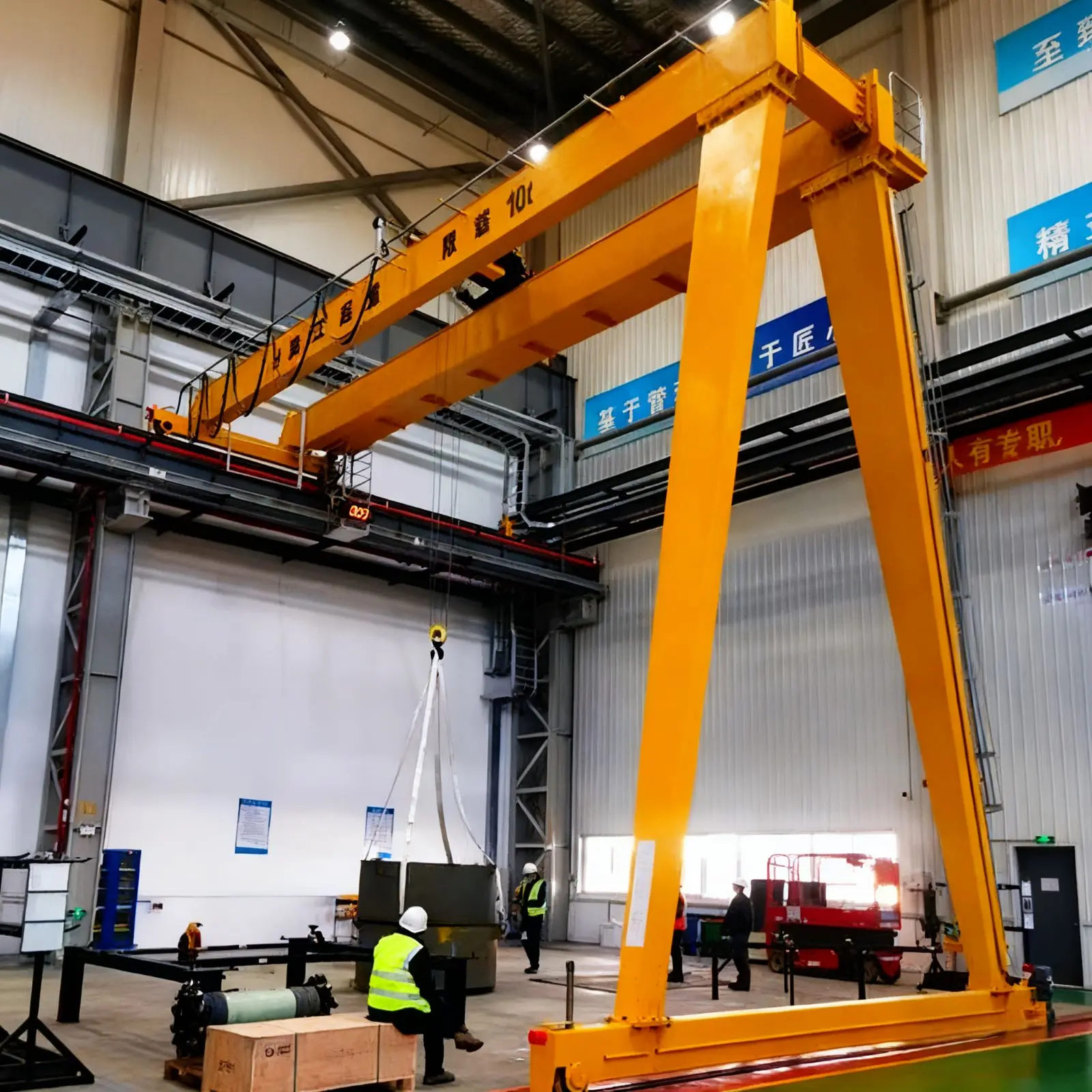
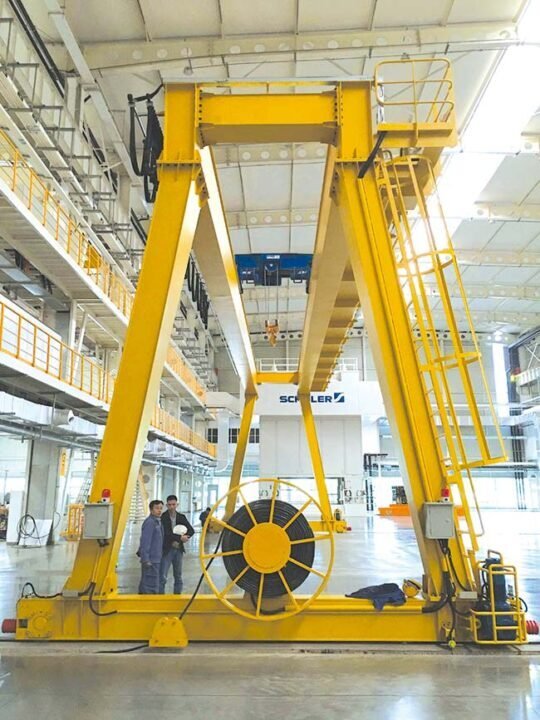
A mobile portal crane is a crane mounted on a portal frame, typically equipped with a bridge, trolley, and hoist, capable of horizontal movement along the ground or rails while lifting and transporting materials vertically. Unlike fixed gantry cranes, it does not require complex groundwork, making it highly flexible and adaptable to various work environments.
- Key Features:
- Rapid deployment and mobility, suitable for changing work areas
- Load capacity ranging from medium to heavy (usually 5–50 tons, customizable for higher loads)
- Highly flexible, compatible with different floor conditions and plant layouts
- Typical Applications:
- Material handling on factory assembly and production lines
- Stacking, loading, and sorting in warehouses
- Container and cargo handling at ports
- Transporting construction materials and steel structures at construction sites
2. Key Features of a Mobile Portal Crane
Structural Design
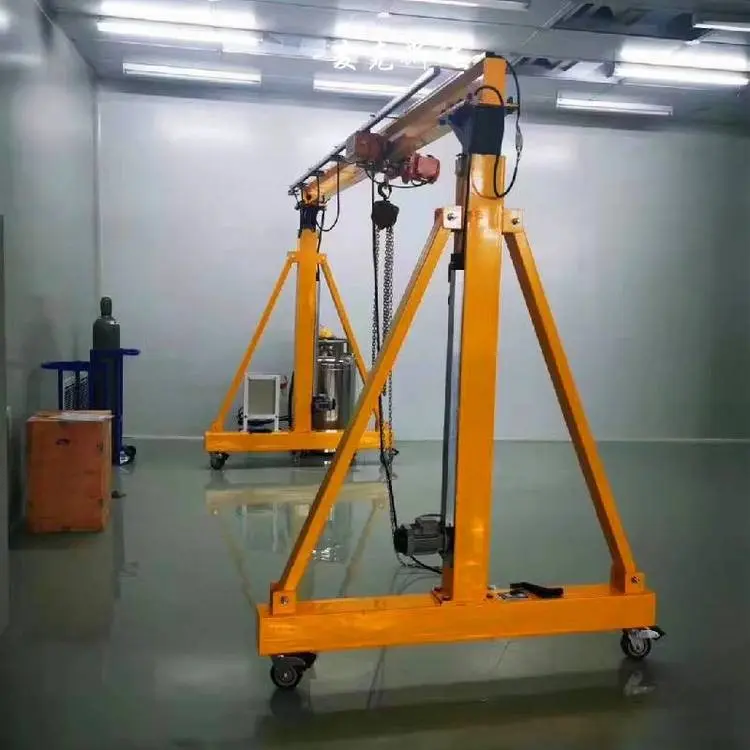
- The portal frame and bridge are the main load-bearing components. High-strength steel and optimized welding ensure rigidity and durability.
- Wheels or tracks are designed for different ground conditions, including flat floors, concrete surfaces, or soft terrain.
- Frame height and span can be customized to meet the spatial requirements of workshops, ports, or construction sites.
Hoist and Trolley System
- The electric hoist or winch is the core lifting mechanism, determining maximum lifting capacity, speed, and precision.
- The trolley moves along the bridge, enabling horizontal material transport, often equipped with anti-sway devices for stable load handling.
- High-performance systems typically include disc brakes, hardened gear reducers, and durable wire ropes to enhance stability and safety.
Mobility and Flexibility
- Rapid deployment: No fixed rails required, allowing fast relocation within work areas.
- Ground adaptability: Can operate on flat surfaces, light rails, or tracks, suitable for factories, ports, and construction sites.
- Compared to fixed gantry cranes, it reduces civil engineering costs and is ideal for temporary or frequently changing operations.
Control and Safety Systems
- Supports PLC control, handheld remote, or floor-mounted control stations for easy operation.
- Equipped with multiple safety devices, including limit switches, overload protection, emergency stops, and buffers.
- Advanced models provide load monitoring, remote diagnostics, and data logging to optimize production scheduling and maintenance planning.
Load Capacity and Span Options
- Standard mobile portal cranes support loads from 5 to 50 tons, with higher capacities available on demand.
- Bridge spans range from 10 meters to over 30 meters, and frame height can be adjusted according to operational needs, ensuring efficiency and safety across different scenarios.
3. Industrial Applications of Mobile Portal Cranes
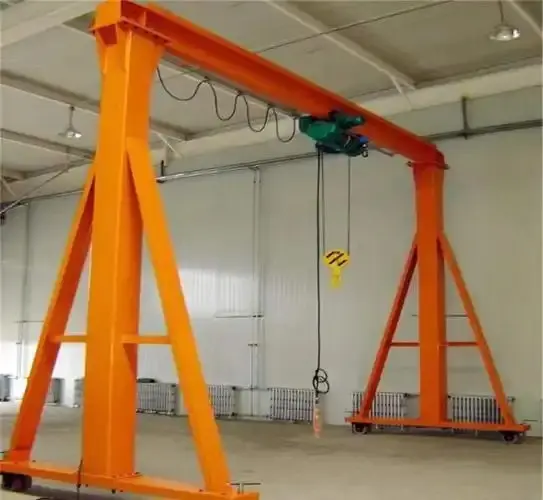
- Manufacturing: Handling heavy components and transporting materials along production lines.
- Logistics and Warehousing: Stacking, loading/unloading, and automated sorting operations to improve efficiency.
- Ports and Shipping: Moving containers and bulk cargo, reducing turnaround time and enhancing logistics operations.
- Construction Sites: Lifting steel structures, transporting construction materials, and handling heavy equipment to improve project efficiency.
- Specialized Projects: Ideal for assembling large machinery or steel structures, supporting high loads and long spans while ensuring operational safety.
4. Advantages of Mobile Portal Cranes
- High Flexibility: Can be quickly deployed and moved to different work areas.
- Cost Efficiency: Eliminates the need for fixed rails, reducing construction and installation costs.
- Safety and Reliability: Multiple safety devices protect operators and equipment.
- Durability: High-strength materials and optimized structural design extend service life.
- Wide Applicability: Suitable for industrial, logistics, port, and construction scenarios with easy operation.
5. Maintenance and Operational Tips
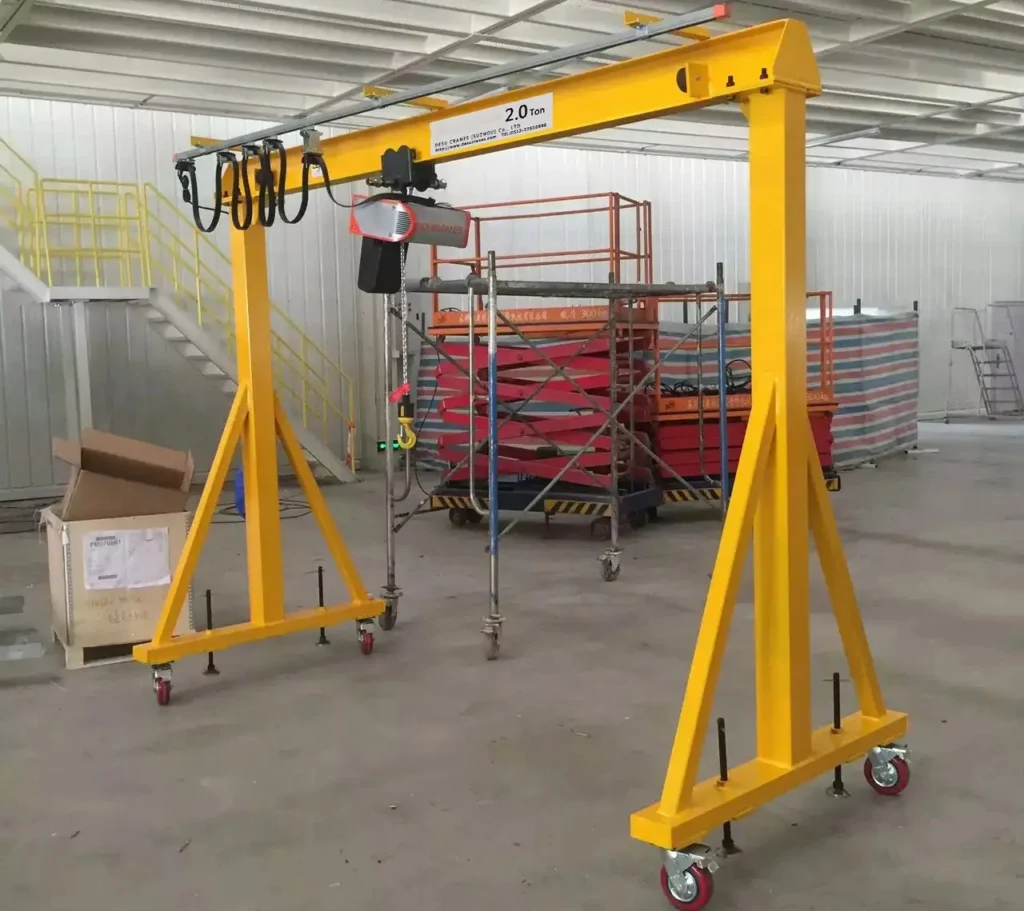
- Daily Inspections: Check wheels or tracks, wire ropes, hoist mechanisms, and electrical systems.
- Regular Maintenance: Lubricate gears, tighten bolts, inspect motors and trolley systems to ensure long-term stable operation.
- Troubleshooting: Address issues such as movement jams, lifting abnormalities, or control system malfunctions promptly to prevent production delays and maintain safety.
6. Conclusion
Mobile portal cranes play a vital role in modern industrial and construction operations. Selecting the right model, optimizing deployment, and performing regular maintenance are essential for safe and efficient operation. With professional design and proper use, companies can not only improve productivity but also extend equipment lifespan, delivering long-term value. Email: yonghaoqizhong@163.com