Chinese (Simplified)
 Arabic
 Dutch
Dutch English
 French
 German
 Italian
 Portuguese
 Russian
 Spanish
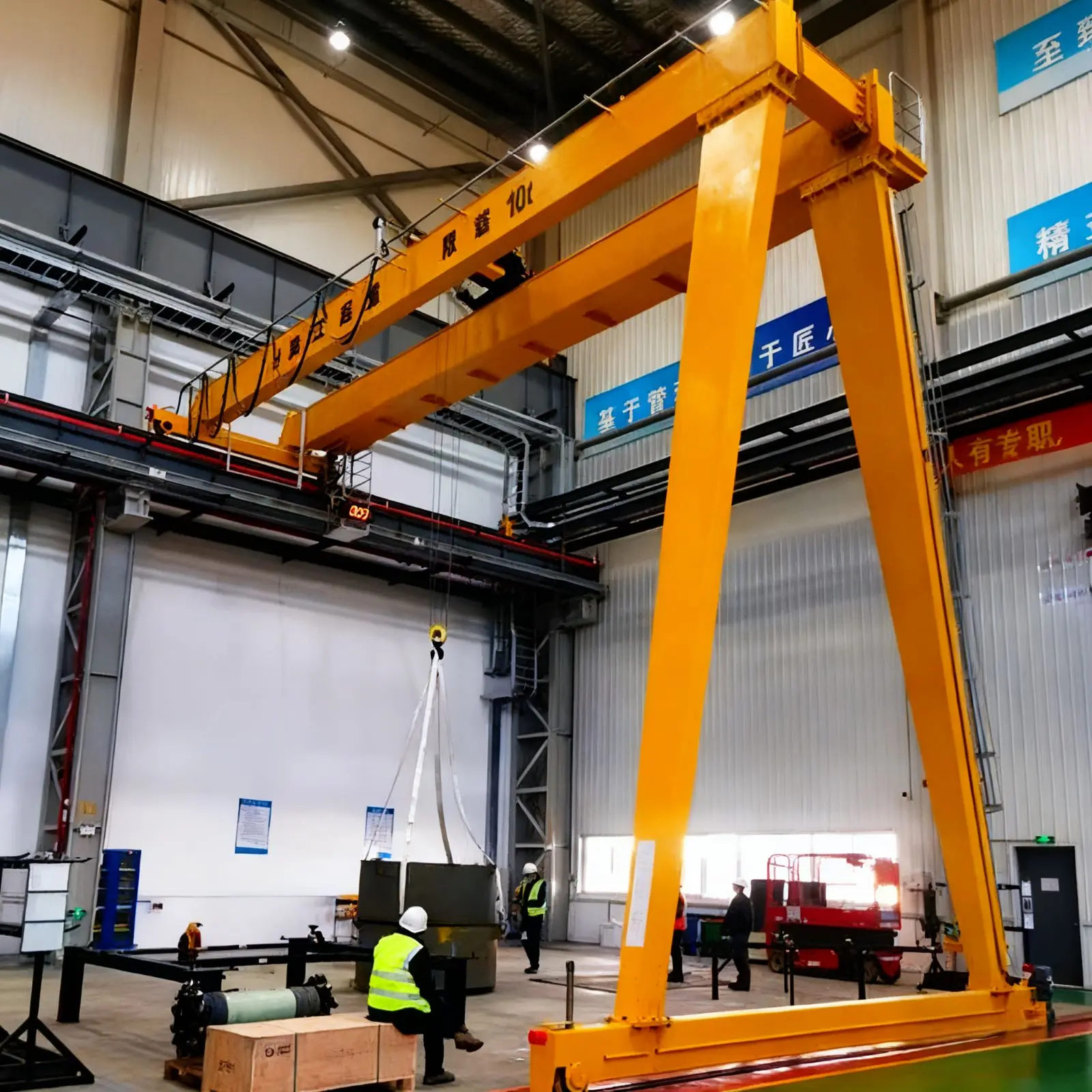
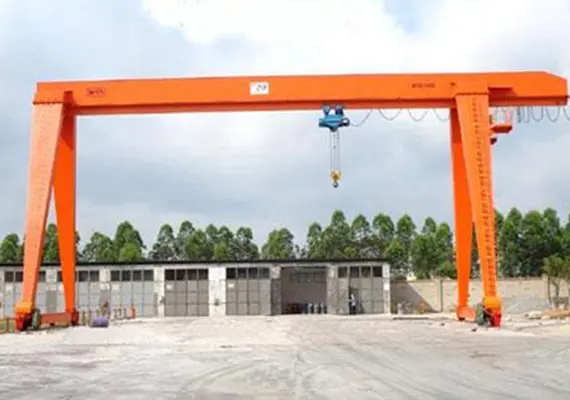
In the field of industrial lifting and material handling, a Gantry Crane is a robust and versatile lifting machine designed for heavy-duty operations. According to ISO 4306-1:2007 — Cranes — Vocabulary, a gantry crane is defined as a crane running on ground-level rails or wheels with a bridge, legs, and lifting mechanism.
Unlike an Overhead Crane, a gantry crane does not rely on the building structure for support. Instead, it uses its own legs to move along the ground, making it highly flexible and easy to install—ideal for outdoor environments or workplaces where fixed infrastructure is unnecessary.
1. Main Components of a Gantry Crane
A typical gantry crane consists of the following key parts:
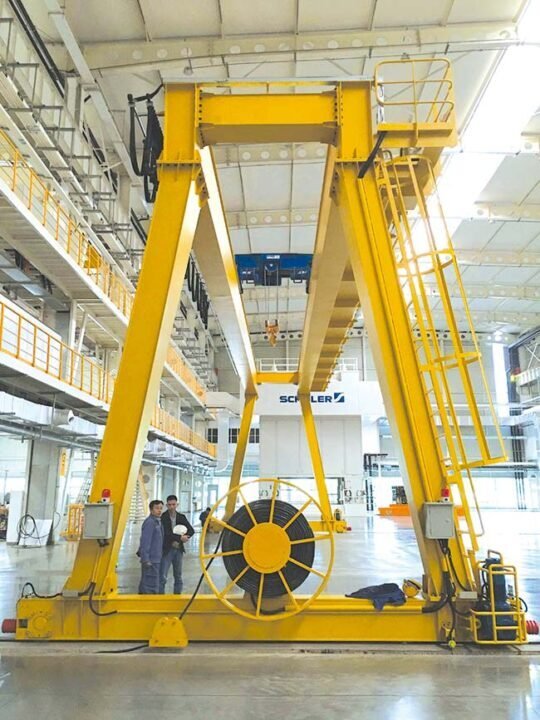
- Main Girder – The primary horizontal beam connecting the legs, supporting the trolley and hoist system.
- Legs – Vertical supports that connect the main girder to the ground. They may be fixed or movable depending on the model.
- Trolley – Mounted on the main girder, it carries the hoist and moves horizontally to position loads.
- Hoist – The lifting mechanism responsible for raising and lowering materials, often electric-powered.
- Travel Mechanism – Allows the entire crane to move longitudinally along rails or wheels.
This modular design enables gantry cranes to operate efficiently even in confined or irregular workspaces.

2. Common Types of Gantry Cranes
Gantry cranes are categorized based on their structure, mobility, and usage:
- Full Gantry Crane – Features two full legs that span the entire working area, commonly used in shipyards and container terminals.
- Semi-Gantry Crane – One leg runs on ground rails while the other side is supported by a wall or building column, ideal for indoor/outdoor hybrid environments.
- Portable Gantry Crane – Lightweight and mobile, perfect for maintenance or temporary lifting tasks.
- Single vs. Double Girder Gantry Crane – Double girder models offer higher lifting capacity and stability, while single girder cranes suit medium-duty applications.
3. Applications of Gantry Cranes
Gantry cranes are used across numerous industries that require efficient heavy-load handling:
- Ports and Container Terminals – Loading and unloading steel structures and containers.
- Manufacturing and Assembly Plants – Precise positioning of heavy components during assembly.
- Warehouses and Logistics Centers – Improving material flow and reducing manual labor.
- Construction and Infrastructure – Lifting steel beams, molds, and concrete structures.
- Energy and Mining – Handling heavy machinery in wind power, nuclear, or mining operations.
According to OSHA (Occupational Safety and Health Administration) standards, all crane operations must comply with load limits, inspection protocols, and operator safety training requirements to ensure workplace safety.
4. Advantages of Using a Gantry Crane
- Flexible Installation – Independent of building support, suitable for both indoor and outdoor use.
- Optimized Space Utilization – Can move in multiple directions within a limited area.
- Low Maintenance Cost – Simple mechanical structure, easy to repair and service.
- Customizable Design – Adjustable span, height, and lifting capacity based on project needs.
- High Mobility – Some models feature wheeled bases for quick relocation.
These features make gantry cranes one of the most practical and efficient lifting solutions for industrial operations.
5. Safety and Maintenance Requirements
Regular maintenance is critical to ensuring reliable performance and safety. According to ISO 9927-1 — Cranes — Inspections — General, inspection routines should include:
- Daily Inspection – Checking wire ropes, hooks, brakes, and controls before operation.
- Periodic Inspection – Conducted quarterly or semi-annually by certified technicians to examine structural wear, lubrication, and electrical systems.
- Annual Inspection – Comprehensive assessment of load tests, traveling mechanisms, and safety systems.
Following these maintenance standards helps extend equipment lifespan, reduce downtime, and minimize safety risks.
6. Conclusion
Understanding what is a gantry crane—including its definition, structure, and operation—helps businesses make informed decisions when selecting the right lifting equipment.
At Yonghao Crane, we specialize in designing and manufacturing high-performance gantry cranes with a focus on compact design, maintenance-free operation, and precision control. With over a decade of industry experience and more than 20 technical patents, we provide comprehensive lifting solutions, from design and manufacturing to global installation and after-sales support.
For professional consultation or a customized gantry crane solution, contact us at yonghaoqizhong@163.com.